


Why Magento is Better Than Shopify
07 Dec 2018
 Mike Patel
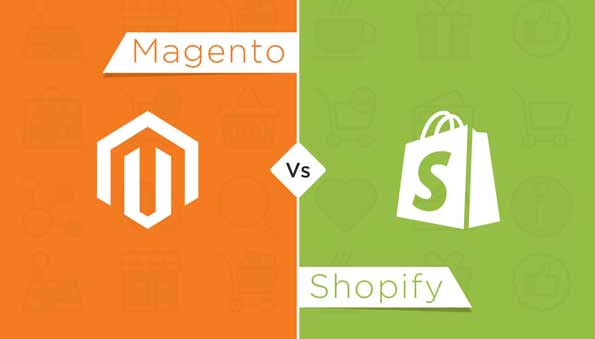
If you’re interested in getting into the world of e-commerce, then it’s imperative that you use the best system out there. Since this business is all about marketing your wares to new customers and finding more leads, you have to utilize the right service to ensure that you’re getting the best results for your money.
With that in mind, we wanted to take a look at the top two e-commerce stores: Magento and Shopify. Although there are a lot of similarities between the two, we have to say that Magento is by far the better choice. Let’s go over the reasons why.
Comparing the Two
To get a better sense of how these e-commerce platforms stack up against each other, let’s break down how they compare in a variety of situations. From how to get started to how well they can be customized to fit your needs, each one has some pros and cons.
Hosting
If you’re going to have any kind of website, you need to have a hosting service to get it up and running. Since you need access to servers around the world, it’s imperative that you can choose the model that’s right for you.
With Shopify, you have to use the brand’s proprietary service, which means that you have no control over how your store is hosted. While this can make it easier for you on the back end, it can also be limiting since you can only do what Shopify allows you to do.
With Magento, it works as a third-party system – this means that you have to find a hosting service that can keep your store online. If you’re looking for an all-in-one solution, then this can add some complications to the startup process, but it does mean that you can pick the hosting plan that’s right for your needs.
In some cases, you can actually save money when comparing the two. Shopify has a single flat rate based on how many features you want, while Magento gives you more flexibility. If you can find an affordable hosting service like HostGator or SiteGround, you can pay significantly less per month.
Verdict: Shopify is easier to get started, but Magento has more customization
Source Code
For the most part, if you’re new to the world of e-commerce, you’re not going to worry too much about how to build your site from scratch. Shopify gives users a “plug and play” system that offers them a simple and effective starting method.
When looking at the coding, Shopify uses a proprietary system called Liquid, while Magento uses PHP. Magento is also open-source (similar to WordPress), which means that you can make changes to it as much as you like. If you’re into coding or you want the capability of customizing your store, then Magento is the place to go. Otherwise, with Shopify, you have to use the program as they dictate.
So why does coding matter? Well, if you plan on expanding and altering your store as you grow your business, then it will become more and more crucial to be able to make adjustments as you see fit. With a system like Shopify, you’re limited to the size and complexity of your digital storefront because you can only use what they offer.
In the end, unless you are just trying to manage a pared-down and straightforward e-commerce store, you will do a lot better by utilizing Magento.
Verdict: Magento is more user-friendly, but Shopify is made for beginners
Pricing
For many store owners, one of the most crucial elements is the cost. If you’re paying a lot of money to keep your site up and running, then it can eat into your bottom line and, by definition, your profitability.
Unfortunately, Shopify can get expensive really fast.
First of all, the site charges you a monthly fee to use their services. Since all of the coding and tools are proprietary, you have to pay if you want to open a store. Shopify does offer a free trial, but that’s not enough to offset the costs.
By comparison, Magento has a free option that you can use. All you have to do is find a hosting service, and you’re ready to go. Best of all, the free Community Edition has a lot of different customization options, meaning that you’re not limiting yourself too much by going that route.
When you break it down, the base level of Shopify is at least $29 per month. Depending on where you get your hosting done, you can pay as little as $4 per month with Magento.
Another downside to Shopify is that the company takes a cut of all of your transactions. As you can imagine, if you’re selling a lot of products, these fees can add up really fast. Although you can upgrade to a better version to eliminate most of these costs, that does mean that you’re paying more per month. You will save money in the long run, but not when you compare it to Magento.
Verdict: Magento is definitely the more affordable option, no matter which way you slice it
Scalability
When you look at the kinds of businesses that use these services, you will notice a lot more high-volume companies using Magento. This is because the system is much easier to scale than Shopify.
Once again, this all comes down to the fact that Magento is much more customizable. Since you can work with the open-source material to adjust the program how you see fit, it’s much easier to scale up or down depending on your sales. Also, you can open multiple stores and manage them much more efficiently.
With Shopify, you have to rely on their internal team to manage everything on the back end. While you do have some control over your site’s appearance, including add-ons (more on those later), anything to do with coding or scaling is up to Shopify’s development team.
Overall, if you want more autonomy over your e-commerce store, then Magento is the better option. However, if you don’t plan on growing too big and you don’t want to have to work to keep your store operational, then Shopify is your ideal choice.
Verdict: Magento for full-service storefronts and large-scale businesses – Shopify for little guys who don’t want to code or program
Add-Ons and Apps
Because Magento is open-source, that means that anyone can create an add-on or application that’s compatible with the system. Shopify, however, has to rely on its internal team to create anything new.
As such, you have many more options when you use Magento. There are thousands of potential apps (both free and paid), compared to a hundred or so with Shopify. Also, if you want access to the best add-ons with Shopify, you have to pay extra for the privilege. With Magento, many of the high-quality options are either free, or you just pay for the ones that you use.
Think of it like this – Shopify is like the cable company and Magento is like streaming on demand. With the cable company, you have to pay a higher fee to access a wide variety of channels, most of which you will probably never watch. With on-demand streaming, however, you choose what you want, and you pay accordingly.
Verdict: Magento is much better at offering add-ons. It has more selection, better prices, and easier integration.
Owner Control
Since this is your storefront, you should be able to control everything about it, right? Well, if you choose to use Shopify, then you have to follow the parameters set forth by the company. Since you’re using their servers, their program, and their add-ons, you can’t set up your shop however you see fit.
With Magento, you have total control. Everything that happens with your storefront is by your own design, from the branding to the layout to the apps you install and operate.
As a business owner, having this level of control over your store is incredible. Even if you’re not sure what to do when you’re first starting out, having this capability will come in handy when you finally decide what’s going to set you apart and make your store unique.
Verdict: Magento is liberating for business owners – Shopify is not
Customer Experience
While your abilities to run your store are crucial to the success of your business, it’s also essential that your customers like using your platform as well.
Although Shopify can be easier to use for non-developers on the back end, it’s sorely lacking when compared to Magento on the front. Here are a few of the ways that Magento outshines Shopify for your clientele.
SEO and Marketing
It’s much easier to find your storefront online when you use Magento’s tools. Shopify is all about promoting its own brand, so your business entity comes second to that. In the end, it makes it harder for you to stand out and for your customers to find you.
Checkout
Hands down, Magento is much easier to use when checking out than Shopify. When ranked in a variety of tests, Magento outperformed Shopify in almost every metric. Your customers will love the speed and efficiency offered by your storefront if you use Magento.
Variety
Shopify will cap how many items you can sell at any given time. If you want to sell more, then you have to pay for a different package. With Magento, you can have an almost unlimited number of items for sale, and it’s so easy to add more. This will allow you to have much more variety (including variations of the same products) and deliver volume and selection to your customers.
Verdict: Magento is better for both business owners and online shoppers, period
As you can see, there is almost no reason to go with Shopify if you can help it. If you need assistance in setting up your online store or marketing your business, then let IoVista take care of the particulars for you. We know Magento well, and we can help propel your storefront to the success that you deserve. Contact us today to get started.
Mike Patel

Mike Patel is the Founder and CEO of ioVista, a leading digital commerce agency specializing in eCommerce solutions. With a strong background in business and technology, Mike Patel has been at the forefront of driving digital transformations for businesses. He has successfully navigated the ever-changing landscape of eCommerce, helping companies leverage the power of online platforms to grow their brand, increase revenues, and optimize their digital presence. Under his leadership, ioVista has become a trusted partner with major technology companies: Adobe/Magento, Google, BigCommerce, Shopify, and Yahoo. He is dedicated to staying ahead of industry trends, adopting cutting-edge technologies, and continuously improving strategies to provide clients with a competitive edge. Mike’s commitment to excellence and client satisfaction is evident in every project ioVista undertakes.
Popular Posts
-

-
 Magento
B2B Excellence Starts with Adobe Commerce (Magento) - Not WooCommerce
Mike Patel
03 Jun 2025 -

-

-

-

-
 Magento
Leverage ERP Integration to Scale Your B2B eCommerce Business in 2025
Mike Patel
15 Apr 2025 -
-
-
-
-
-
-

-

-

-
 Magento
What Makes a Great Online B2B Customer Portal? Top 10 Features to Know
Mike Patel
04 Feb 2025 -
 Magento
Legacy B2B eCommerce Systems Slowing You Down? It's Time for Modernization
Mike Patel
28 Jan 2025 -

-

-

-
 Magento
Security Update APSB24-73 for Adobe Commerce: Everything You Need to Know
Mike Patel
14 Oct 2024 -

-

-
 Magento
Hyvä Theme for Magento 2: Uncover Powerful Features – Evaluate Pros and Cons
Mike Patel
16 Jul 2024 -
-

-

-

-

-

-
 Magento
It’s Official: ioVista Has Become a Recognized Adobe Specialized Partner
Mike Patel
05 Sep 2023 -
-

-

-

-
-

-

-

-

-

-
 Magento
BigCommerce Releases StagingPro for Enterprise Merchants and Agency Developers
Mike Patel
15 Dec 2022 -
-

-
 Magento
Universal Analytics Going Away: What Does it Mean, What you need to Do?
Mike Patel
24 Nov 2022 -

-
 Magento
Website Support: How Can ioVista Help keep your Store Up and Running During Holidays
Mike Patel
17 Nov 2022 -

-

-

-

-
-

-

-

-

-
 Magento
How BigCommerce makes it easy for Legacy Businesses to get started with B2B eCommerce
Mike Patel
23 Aug 2022 -
 Magento
The Challenges of eCommerce in Manufacturing and how to Overcome them
Mike Patel
17 Aug 2022 -
-
-

-

-

-

-
-
 Magento
Is your Store Optimized? How do you Measure eCommerce Conversion Rates?
Mike Patel
11 May 2022 -

-

-
 Magento
BigCommerce Strengthens Its Hold in B2B eCommerce Landscape: Acquires Bundle B2B
Mike Patel
27 Apr 2022 -

-
-
 Magento
BigCommerce Releases Multi-Storefront: Multiple Brand Management within a Single Store
Mike Patel
01 Apr 2022 -
 Magento
Adobe Commerce and Magento 1 Sites at Risk: Magento Vulnerabilities Exploited
Mike Patel
29 Mar 2022 -

-
 Magento
ioVista named as Dallas’ most Recommended and Reviewed Digital Strategy Companies 2022
Mike Patel
24 Feb 2022 -
-

-
 Magento
Progressive Web App: A well-established Approach to Architecting a Modern Website
Mike Patel
11 Feb 2022 -
-
 Magento
How to Improve Internal Site Search for Better Mobile Conversions: 7 Proven Strategies
Mike Patel
27 Jan 2022 -

-

-

-

-
 Magento
Are Your FB, Instagram, Pinterest Accounts Geared for Social Shopping?
Mike Patel
30 Nov 2021 -

-

-
-

-

-
 Magento
These 5 Local Business Marketing Strategies Will Transform Your Business
Mike Patel
17 Sep 2021 -

-
-

-





Let’s work together to create outstanding digital experiences.
With 20+ years of industry experience, ioVista understands your eCommerce needs and delivers best-in-class solutions that help you gain a competitive edge.
or Call us at: +1 214-699-4391

TOP
Get in Touch