


Transforming Your Business thru Technology
23 Sep 2018
 Mike Patel

A company must learn to adapt to changes not only in their industry but with technology too. The fast paced changes in technology force a company to look at how they do business and what they need to change to continue to be competitive.
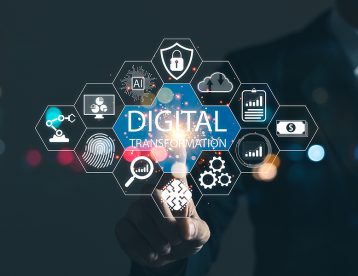
The addition of technology to your business’ practice is the digital transformation. By integrating digital technology into all areas of your business you are changing the operations and delivering more value to your customers. Without digital transformation a company will struggle to survive.
Benefits From Digital Transformation
Digital transformation provides a company with several benefits. These benefits include:
- An increase in competitiveness
- The company becomes more profitable
- The efficiency of the company increases
- Technology helps the company evolve
- Pushes the company to move towards being on the leading edge
- Closes the gap between the companies digital transformation and the individuals digital transformation
- Increased value delivered to the customers
The Framework for Digital Transformation
When setting the groundwork to complete a digital transformation, a company must understand that not everything will work. This process is a continual improvement of existing practices in order to reach the goals of the company.
First the company needs to look at the customer experience. Improvements in the customer’s experience will help ensure repeat business. If the customer is happy, the more likely they are too return or recommend the company and product to friends and family.
Next the company needs to become more agile in their operations. This means that the company can adjust quickly while still being effective and efficient. The ability to be agile and shift operations helps reduce potential losses that could occur.
When a company goes through a transformation, communication is important. Communicating the changes and positive benefits by management is key for the employee’s acceptance. This acceptance transfers into the company’s culture.
The company must allow for employees to become enabled. Giving employees the power to react and make decisions makes them feel appreciated and a bigger part of the company. The employees feel they have a sense of ownership and then the pride in the company increases.
Finally, when integrating the technology make sure the employees receive the proper training. Employees that are not properly trained on new technology or procedures can discourage them and make them less productive.
Areas of Digital Transformation
Digital transformation can include areas like web design, e-commerce and online marketing. Within each of these areas are specific focus points to increase the effectiveness of the changes in technology.
Web Design
A company’s website is an electronic business card. If the website is hard to navigate, customers will get frustrated and give up. The digital transformation will create a website that is more functional and interactive. An easier to use website with increased functionality increases the user’s experience. Keep the website sleek and simple. Cluttering a website just makes things harder to find.
E-Commerce
E-Commerce or electronic commerce is the transfer of data via electronic media for the purchase of goods or services. E-commerce can include purchase orders, receivers, sales invoices and invoice payments. The electronic management of inventory and product catalogs becomes more efficient from the physical inventories and old paper catalogs.
Online Marketing
This may be one of the biggest opportunities that is underutilized by a company. A company has a variety of options to increase their electronic marketing presence. With electronic marketing on the rise, a company can miss significant chances to capture their target audience. But knowing how to cash in on those opportunities can be hit or miss if you don’t have the right marketing campaign.
Many companies currently have websites, but how their customers find them is a specialty that is called search engine optimization or SEO. SEO uses keywords to lead customers to your website. Determining these keywords can be tricky. If a company is not familiar with this type of marketing, finding a company that specializes in web design and SEO’s can be beneficial in increasing your traffic on your website.
Another online marketing strategy is the pay per click. This strategy uses other company’s websites to advertise your product. The website where the advertisement is located does not receive a flat fee instead your company pays the website owner only if a customer clicks on the link to your website. Some people call this cross advertising. One company is using another company with similar interests and targets the market to promote their products in the hopes of getting cross traffic from the one site to your company site.
Now days everyone is on some sort of social media whether it is Facebook, Twitter or Snap Chat. Social media can increase sales revenues because of the large numbers a company can reach in a short period of time. For example, if one customer follows your company on Facebook and they have 100 friends following them. There is a good possibility that the majority of those 100 friends saw your product or service. Say 80 of those friends did see the company’s product and they shared the post of your product to their 200 friends. This type of marketing is like a spider web. As a company you are connecting one point or customer with another through a shared need, want or experience.
Remember digital transformation does not happen overnight. It takes planning and some risks. But without risks, there is no reward. Things may not work like you expected but do not give up. Keep trying. Persistence is key!
For more information on digital transformation, please contact our office for an appointment.
Mike Patel

Mike Patel is the Founder and CEO of ioVista, a leading digital commerce agency specializing in eCommerce solutions. With a strong background in business and technology, Mike Patel has been at the forefront of driving digital transformations for businesses. He has successfully navigated the ever-changing landscape of eCommerce, helping companies leverage the power of online platforms to grow their brand, increase revenues, and optimize their digital presence. Under his leadership, ioVista has become a trusted partner with major technology companies: Adobe/Magento, Google, BigCommerce, Shopify, and Yahoo. He is dedicated to staying ahead of industry trends, adopting cutting-edge technologies, and continuously improving strategies to provide clients with a competitive edge. Mike’s commitment to excellence and client satisfaction is evident in every project ioVista undertakes.
Popular Posts
-

-
-
-

-
-

-

-

-

-

-
-
-
-
-
-
-
-
 News
NewsLegacy B2B eCommerce Systems Slowing You Down? It's Time for Modernization
Mike Patel
28 Jan 2025 -
-

-
-
 News
NewsSecurity Update APSB24-73 for Adobe Commerce: Everything You Need to Know
Mike Patel
14 Oct 2024 -
-

-
 News
NewsHyvä Theme for Magento 2: Uncover Powerful Features – Evaluate Pros and Cons
Mike Patel
16 Jul 2024 -
-

-
-

-

-

-
 News
NewsIt’s Official: ioVista Has Become a Recognized Adobe Specialized Partner
Mike Patel
05 Sep 2023 -
-
-

-

-
-
-

-

-
-

-
 News
NewsBigCommerce Releases StagingPro for Enterprise Merchants and Agency Developers
Mike Patel
15 Dec 2022 -

-

-

-

-
 News
NewsWebsite Support: How Can ioVista Help keep your Store Up and Running During Holidays
Mike Patel
17 Nov 2022 -

-
-

-

-
-

-

-

-

-
 News
NewsHow BigCommerce makes it easy for Legacy Businesses to get started with B2B eCommerce
Mike Patel
23 Aug 2022 -

-
-
-

-

-

-

-
-
-

-

-
 News
NewsBigCommerce Strengthens Its Hold in B2B eCommerce Landscape: Acquires Bundle B2B
Mike Patel
27 Apr 2022 -

-
-
 News
NewsBigCommerce Releases Multi-Storefront: Multiple Brand Management within a Single Store
Mike Patel
01 Apr 2022 -
 News
NewsAdobe Commerce and Magento 1 Sites at Risk: Magento Vulnerabilities Exploited
Mike Patel
29 Mar 2022 -
-
 News
NewsioVista named as Dallas’ most Recommended and Reviewed Digital Strategy Companies 2022
Mike Patel
24 Feb 2022 -

-

-
 News
NewsProgressive Web App: A well-established Approach to Architecting a Modern Website
Mike Patel
11 Feb 2022 -

-
 News
NewsHow to Improve Internal Site Search for Better Mobile Conversions: 7 Proven Strategies
Mike Patel
27 Jan 2022 -

-

-

-

-

-

-
-
-

-

-
 News
NewsThese 5 Local Business Marketing Strategies Will Transform Your Business
Mike Patel
17 Sep 2021 -

-
-

-


Let’s work together to create outstanding digital experiences.
With 20+ years of industry experience, ioVista understands your eCommerce needs and delivers best-in-class solutions that help you gain a competitive edge.
or Call us at: +1 214-699-4391

TOP
Get in Touch