


The Challenges of eCommerce in Manufacturing and how to Overcome them
17 Aug 2022
 Mike Patel
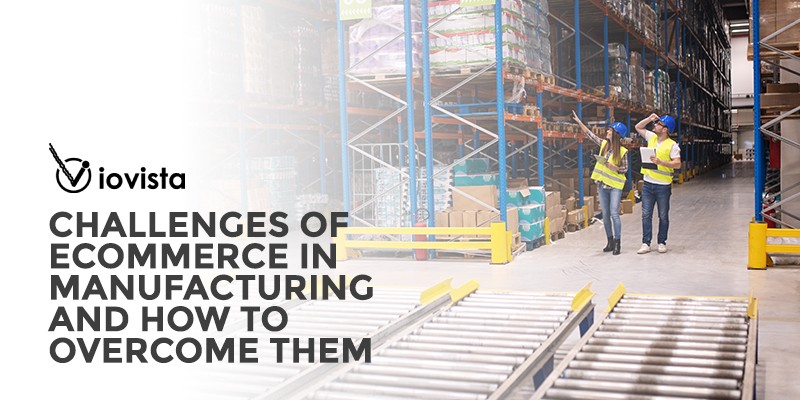
B2B eCommerce is booming and seemingly bringing new waves of excited investors and business leaders with every new day. According to Statista and their model, B2B eCommerce sales in the United States will reach 1.8 trillion U.S. dollars in 2023. And yet, while that growth is certainly thrilling, not every manufacturing business is thriving in the eCommerce world.
One could say that is due to numerous factors. However, from our perspective, it’s likely due to the challenges that new and veteran eCommerce explorers must face on a regular basis. These challenges collectively pull back the growth of eCommerce and further deter new people from embracing it.
The Challenges of eCommerce in Manufacturing
- Create an engaging eCommerce experience for customers
- Pricing products correctly for an online audience
- Importance of customer service
- Importance of good logistics and order fulfillment
- Managing inventory and sales data – online and offline
- Need for a strong online presence to reach buyers
● B2B Relationships
You are undoubtedly aware of how important it is to develop relationships in business. So instead of dragging you through all of that, we will focus on something else— how building relationships in B2B eCommerce is different from what you know.
You’re most likely familiar with the average B2C relationship, however,
The Challenge
Well, unfortunately, that knowledge will do you little good because B2B eCommerce relationships are in a world of their own for three reasons, and we’ll talk about each one below.
- B2B relationships are built to last, as in business customers mean to build and maintain relationships with you from the very start—relationships will often span years and years. That is very unlike B2C relationships, which typically begin and end with a single transaction.
- B2B buyers fit a particular niche, meaning that B2B sales representatives may only work with B2B buyers in a specific industry located in a specific city. Now, on the other side of the road, B2C representatives will market to the largest audience they can manage, which could be the entire country or even beyond.
- B2B relationships often require constant and consistent communication with your management team, sales teams and even executives. Actually, to that point, CEOs of the businesses will often form relationships to strengthen the bond further. Simply put, the average client in the B2B eCommerce world will purchase your attention in addition to the product.
Those three reasons are enough to tip the scales and make developing relationships in B2B eCommerce more than the slightest bit tricky. But here’s how you can overcome the challenge.
The Solution
There are three things that you must do to ensure that you can overcome the challenges and build the relationships that you want.
Now, as we mentioned, buyers fit a particular niche in this world. And going in blind with guns blazing won’t yield the results you’re looking to find. So step one? Do your research and make sure that you understand your ideal buyer at the end of the day.
Step two, lean into their desire to have a long-term relationship and their demand to have your attention as a business partner. And ensure that throughout every stage of your relationship, you actively plan a long-term future that will provide you both with the results you need.
Step three, maintain your relationship with a win-win mentality.
● Siloed Data
Siloed data is a problem that eventually makes its way into every B2B eCommerce sphere. And at its fundamental level, siloed data is a collection of data that is kept by a single group, which is not easily accessible by other groups or people.
The Challenge
At first, siloed data seems like a harmless little problem. One that, if you want to, you can fix on your own time—with no need to rush. Unfortunately, siloed data can infect a business to the point that it slowly brings it to its knees.
How?
- When siloed, relevant data is kept on lockdown. And in a business world where data is crucial for every position in an organization, that’s a massive problem.
- You cannot rely on old siloed data. All data needs to be up to date. For example, if you’re determining whether a brand new change to your website is aiding its performance and using old data, you could end up at the wrong conclusion—wasting your time and money.
- Siloed data does not encourage collaboration. When half of a data-driven organization is cut off and deprived of critical data, they cannot collaborate with other departments and produce results.
The Solution
With the looming danger of siloed data clear, you need to know how to break them down and ensure a smooth flow of data to your departments. And this is how you do that…
Step one, switch up your management. Not to through anyone under the bus, but if siloed data can spring from poor management, good management can solve it. So look into bringing in new help.
Step two, develop a plan to centralize your data.
Step three, prevent data from being siloed in the future by integrating your data.
● Flexible Payment Options
If you want to be a successful B2B eCommerce company, you need to offer your customers choices. That means that you can’t offer them simply one or two things, here and there—that won’t work. What you need to do is offer them flexibility, especially in terms of payment.
The Challenge
Sadly, many B2B eCommerce companies never got that memo. And as a result, they aren’t keeping up with the trends in payment technology, and they’re at risk of falling behind their competitors in the long run.
Now, fortunately, if you’re one of those companies with the missing memo, you can recover. Here’s how to do it.
The Solution
Ensure that you have a wide assortment of payment options to tailor to any business or customer. The exact options you have may differ depending on your products or services, but you can count yourself as pretty safe if you stick with these.
- Traditional trade credit.
- Purchase order.
- Paper checks.
- Cash on delivery.
- Credit card.
- Mobile wallets.
- ACH.
- Instant credit.
● Shipping Constraints
Shipping is essential for any B2B eCommerce platform. And, of course, as with all essential things, it’s a massive pain to deal with. It’s tough between high shipping costs, slow speeds, and shipping location limitations.
But if you don’t solve them, you’re essentially handicapping your business and failing to improve.
The Solution
As for shipping costs, there are a few good tactics that you can use to keep prices as low as possible and, hopefully, remain well within your budget.
- Comparing pricing from different carriers
- Do bulk shipping
- Pack items in boxes with the smallest dimensions possible
- Use the packaging provided by the carrier
- Pre-pay
- Ask about association discounts
- Factoring shipping fees into product pricing
For slow speeds, you can do a few things.
- Streamline your delivery process
- Use eCommerce automation tools
- Get route optimization software
- Use dropshipping
If you’re worried about encountering shipping location limitations, you can establish your products in different warehouses to ensure you can avoid the hefty cost of shipping to faraway places.
● Price Transparency in Shipping Strategy
Pricing is a massive part of any business strategy. In order to have a successful business, your pricing needs to be high enough to account for shipping and create profit. However, still, be low enough to compete with competitors.
The Challenge
You may have found your pricing sweet spot, but inflammation, competitor pricing, supply chain issues or the big one, shipping costs can all push out of it and force you to make changes. And how you go about making those pricing changes is critical.
Doing it wrong can lead to losing sales, such as trying to spin it in some clever way. Studies have shown that that tactic never works—even for larger companies.
The Solution
So what you need to do instead is be straightforward.
In fact, it’s fully supported by research that you must, in order to avoid damaging the relationship you worked so hard to create. So instead of donning your sales associate tie, be honest and present price changes in an informative and authentic tone.
● The Complexity of B2B Products
In a world where most things, if not everything, come simply, something like a complex B2B product can cause a problem or two. And even if that problem is just confusion on the customer’s end, it’s still likely to drive them away—costing you a sale and the possibility of a new relationship.
How do you solve your complex issue?
The Solution
You need to simplify. And keep simplifying until you are left with a product that is no longer complex or confusing—fully streamlined.
You can do that in multiple ways. Here are some of them.
- Create analogies to explain complex ideas
- Address your customer’s problem first. Don’t just jump to your solution.
- Use your customers’ language.
We hope that you get the chance to give these solutions a shot very soon! Connect with a B2B eCommerce specialist at ioVista to start or streamline your B2B eCommerce journey.
Mike Patel

Mike Patel is the Founder and CEO of ioVista, a leading digital commerce agency specializing in eCommerce solutions. With a strong background in business and technology, Mike Patel has been at the forefront of driving digital transformations for businesses. He has successfully navigated the ever-changing landscape of eCommerce, helping companies leverage the power of online platforms to grow their brand, increase revenues, and optimize their digital presence. Under his leadership, ioVista has become a trusted partner with major technology companies: Adobe/Magento, Google, BigCommerce, Shopify, and Yahoo. He is dedicated to staying ahead of industry trends, adopting cutting-edge technologies, and continuously improving strategies to provide clients with a competitive edge. Mike’s commitment to excellence and client satisfaction is evident in every project ioVista undertakes.
Popular Posts
-
 B2B, E-Commerce, Manufacturing
Adobe Commerce Security Update APSB25-50: Key Highlights
Mike Patel
11 Jun 2025 -
 B2B, E-Commerce, Manufacturing
B2B Excellence Starts with Adobe Commerce (Magento) - Not WooCommerce
Mike Patel
03 Jun 2025 -
 B2B, E-Commerce, Manufacturing
AI and ML in B2B: A Vision for the Future of Commerce by 2025
Mike Patel
27 May 2025 -
 B2B, E-Commerce, Manufacturing
20 Next-Gen B2B eCommerce Features that will Dominate in 2025
Mike Patel
20 May 2025 -
 B2B, E-Commerce, Manufacturing
WooCommerce to BigCommerce Migration Fuels Your B2B eCommerce Growth
Mike Patel
06 May 2025 -
 B2B, E-Commerce, Manufacturing
Adobe Commerce SaaS: How Will It Empower Your eCommerce Business?
Mike Patel
22 Apr 2025 -
 B2B, E-Commerce, Manufacturing
Leverage ERP Integration to Scale Your B2B eCommerce Business in 2025
Mike Patel
15 Apr 2025 -
 B2B, E-Commerce, Manufacturing
Adobe Commerce Security Update APSB25-26: All You Need to Know
Mike Patel
10 Apr 2025 -
-
 B2B, E-Commerce, Manufacturing
Why Scaling Business Should Migrate WooCommerce Stores to Shopify
Mike Patel
08 Apr 2025 -
 B2B, E-Commerce, Manufacturing
Why Does Adobe Commerce (Magento) Lead the Way of B2B eCommerce
Mike Patel
18 Mar 2025 -
 B2B, E-Commerce, Manufacturing
10 Key Drivers of Digital Transformation in B2B eCommerce for 2025
Mike Patel
04 Mar 2025 -
 B2B, E-Commerce, Manufacturing
5 Leading eCommerce Platforms to Build Scalable B2B Customer Portals
Mike Patel
25 Feb 2025 -
 B2B, E-Commerce, Manufacturing
Google Search Ranking Volatility: All You Need to Know
Mike Patel
18 Feb 2025 -
 B2B, E-Commerce, Manufacturing
Adobe Commerce Security Update APSB25-08: All You Need to Know
Mike Patel
13 Feb 2025 -
 B2B, E-Commerce, Manufacturing
7 Strategic Benefits of an Online B2B Customer Portal
Mike Patel
11 Feb 2025 -
 B2B, E-Commerce, Manufacturing
What Makes a Great Online B2B Customer Portal? Top 10 Features to Know
Mike Patel
04 Feb 2025 -
 B2B, E-Commerce, Manufacturing
Legacy B2B eCommerce Systems Slowing You Down? It's Time for Modernization
Mike Patel
28 Jan 2025 -
-
 B2B, E-Commerce, Manufacturing
Security Update Available for Adobe Commerce | APSB24-90
Mike Patel
20 Nov 2024 -
 B2B, E-Commerce, Manufacturing
Why Choose Hyvä Enterprise for Your Adobe Commerce Store?
Mike Patel
19 Nov 2024 -
 B2B, E-Commerce, Manufacturing
Security Update APSB24-73 for Adobe Commerce: Everything You Need to Know
Mike Patel
14 Oct 2024 -
-

-
 B2B, E-Commerce, Manufacturing
Hyvä Theme for Magento 2: Uncover Powerful Features – Evaluate Pros and Cons
Mike Patel
16 Jul 2024 -
 B2B, E-Commerce, Manufacturing
Magento 2.4.7: Explore the Newest Enhancements and Features
Mike Patel
30 Apr 2024 -
 B2B, E-Commerce, Manufacturing
Magento 2.4.6-p5: Enhancing Stability and Security
Mike Patel
22 Apr 2024 -
 B2B, E-Commerce, Manufacturing
Everything You Need To Know About eCommerce SEO in 2024
Mike Patel
16 Apr 2024 -
 B2B, E-Commerce, Manufacturing
The Impact of Site Speed on eCommerce SEO Performance
Mike Patel
14 Feb 2024 -
 B2B, E-Commerce, Manufacturing
ioVista Attains B2B Specialization on BigCommerce
Mike Patel
30 Oct 2023 -

-
 B2B, E-Commerce, Manufacturing
It’s Official: ioVista Has Become a Recognized Adobe Specialized Partner
Mike Patel
05 Sep 2023 -
-

-
 B2B, E-Commerce, Manufacturing
ioVista Announced as a 2023 Local Excellence Award Winner by UpCity
Mike Patel
09 May 2023 -

-
-

-
 B2B, E-Commerce, Manufacturing
7 Proven Strategies to Increase B2B/Wholesale eCommerce Revenue
Mike Patel
01 Feb 2023 -
 B2B, E-Commerce, Manufacturing
10 eCommerce Trends to Increase your Sales in 2023
Mike Patel
12 Jan 2023 -
 B2B, E-Commerce, Manufacturing
B2B eCommerce Features Your Store Need in 2023
Mike Patel
05 Jan 2023 -
 B2B, E-Commerce, Manufacturing
Adobe/Magento Highlights 2022 - Is your store Up-to-Date
Mike Patel
20 Dec 2022 -
 B2B, E-Commerce, Manufacturing
BigCommerce Releases StagingPro for Enterprise Merchants and Agency Developers
Mike Patel
15 Dec 2022 -
 B2B, E-Commerce, Manufacturing
Adobe discontinues Support for the 2.4.0-2.4.3 Release Line
Mike Patel
09 Dec 2022 -
 B2B, E-Commerce, Manufacturing
BFCM Round-Up – Get Your Store Ready for Christmas 2022!
Mike Patel
07 Dec 2022 -
 B2B, E-Commerce, Manufacturing
Universal Analytics Going Away: What Does it Mean, What you need to Do?
Mike Patel
24 Nov 2022 -
 B2B, E-Commerce, Manufacturing
40% of Magento and Adobe Commerce Websites at Risk in November 2022
Mike Patel
17 Nov 2022 -
 B2B, E-Commerce, Manufacturing
Website Support: How Can ioVista Help keep your Store Up and Running During Holidays
Mike Patel
17 Nov 2022 -

-
 B2B, E-Commerce, Manufacturing
Adobe Releases Critical Security Patches for Magento 2.4.5 and 2.4.4
Mike Patel
27 Oct 2022 -

-
 B2B, E-Commerce, Manufacturing
ioVista is Sponsoring the Largest eCommerce Event in Dallas
Mike Patel
07 Oct 2022 -
 B2B, E-Commerce, Manufacturing
Magento 2 Vulnerability: Surge in Hacking on Unpatched Stores
Mike Patel
27 Sep 2022 -
 B2B, E-Commerce, Manufacturing
Get your Holiday eCommerce Marketing Started with These 5 Tips
Mike Patel
15 Sep 2022 -
 B2B, E-Commerce, Manufacturing
Why a Magento Code Audit is Essential for your eCommerce Store
Mike Patel
10 Sep 2022 -

-

-
 B2B, E-Commerce, Manufacturing
How BigCommerce makes it easy for Legacy Businesses to get started with B2B eCommerce
Mike Patel
23 Aug 2022 -
 B2B, E-Commerce, Manufacturing
The Challenges of eCommerce in Manufacturing and how to Overcome them
Mike Patel
17 Aug 2022 -
 B2B, E-Commerce, Manufacturing
Adobe Releases Magento Open Source and Adobe Commerce 2.4.5
Mike Patel
10 Aug 2022 -
-
-
-
 B2B, E-Commerce, Manufacturing
The Growth of eCommerce and its impact on the Manufacturing Industry
Mike Patel
01 Jul 2022 -
 B2B, E-Commerce, Manufacturing
The Future of Manufacturing Business is Digital
Mike Patel
24 Jun 2022 -
 B2B, E-Commerce, Manufacturing
Magento Open Source Vs Commerce Vs Cloud: How to Pick your Edition
Mike Patel
14 Jun 2022 -
 B2B, E-Commerce, Manufacturing
Is your Store Optimized? How do you Measure eCommerce Conversion Rates?
Mike Patel
11 May 2022 -
 B2B, E-Commerce, Manufacturing
ioVista Recognized for B2B Services: Excellence Award Winner 2022
Mike Patel
03 May 2022 -
 B2B, E-Commerce, Manufacturing
How to Optimize Your eCommerce Store for Conversions
Mike Patel
29 Apr 2022 -
 B2B, E-Commerce, Manufacturing
BigCommerce Strengthens Its Hold in B2B eCommerce Landscape: Acquires Bundle B2B
Mike Patel
27 Apr 2022 -
 B2B, E-Commerce, Manufacturing
Future Proof your Digital Commerce with Headless Commerce
Mike Patel
21 Apr 2022 -
 B2B, E-Commerce, Manufacturing
Adobe Commerce 2.4.4 Release: Faster, Better, More Scalable
Mike Patel
13 Apr 2022 -
 B2B, E-Commerce, Manufacturing
BigCommerce Releases Multi-Storefront: Multiple Brand Management within a Single Store
Mike Patel
01 Apr 2022 -
 B2B, E-Commerce, Manufacturing
Adobe Commerce and Magento 1 Sites at Risk: Magento Vulnerabilities Exploited
Mike Patel
29 Mar 2022 -
 B2B, E-Commerce, Manufacturing
Is Your Business Ready for Digital Transformation? The Key Steps!
Mike Patel
01 Mar 2022 -
 B2B, E-Commerce, Manufacturing
ioVista named as Dallas’ most Recommended and Reviewed Digital Strategy Companies 2022
Mike Patel
24 Feb 2022 -

-
 B2B, E-Commerce, Manufacturing
February 2022, over 500 Legacy Magento 1 Websites Hacked!
Mike Patel
15 Feb 2022 -
 B2B, E-Commerce, Manufacturing
Progressive Web App: A well-established Approach to Architecting a Modern Website
Mike Patel
11 Feb 2022 -
 B2B, E-Commerce, Manufacturing
Adobe released a new End of Support Date for Magento 2.3.x
Mike Patel
04 Feb 2022 -
 B2B, E-Commerce, Manufacturing
How to Improve Internal Site Search for Better Mobile Conversions: 7 Proven Strategies
Mike Patel
27 Jan 2022 -
 B2B, E-Commerce, Manufacturing
The How & Why: Successful Data-Driven Marketing for eCommerce Stores
Mike Patel
13 Jan 2022 -
 B2B, E-Commerce, Manufacturing
How to Find Right Audience for your Online Business
Mike Patel
10 Jan 2022 -
 B2B, E-Commerce, Manufacturing
5 Key Reasons to Enable Social Commerce Channels for your Store
Mike Patel
17 Dec 2021 -
 B2B, E-Commerce, Manufacturing
ioVista is honored to be one of the Top 1000 Companies 2021
Mike Patel
13 Dec 2021 -
 B2B, E-Commerce, Manufacturing
Are Your FB, Instagram, Pinterest Accounts Geared for Social Shopping?
Mike Patel
30 Nov 2021 -
 B2B, E-Commerce, Manufacturing
Five BFCM Strategies Merchants Love To Implement For Holidays
Mike Patel
26 Oct 2021 -
 B2B, E-Commerce, Manufacturing
How to Meet Holiday Shoppers’ Needs With an Omnichannel Approach
Mike Patel
20 Oct 2021 -
 B2B, E-Commerce, Manufacturing
Support for Magento Commerce 2.3 and Magento Open Source 2.3 Ends
Mike Patel
05 Oct 2021 -
 B2B, E-Commerce, Manufacturing
Why your Business Needs Marketing Automation this Holiday Season
Mike Patel
30 Sep 2021 -
 B2B, E-Commerce, Manufacturing
How Augmented Reality can Deliver more Engaging Shopping Experiences
Mike Patel
21 Sep 2021 -
 B2B, E-Commerce, Manufacturing
These 5 Local Business Marketing Strategies Will Transform Your Business
Mike Patel
17 Sep 2021 -
 B2B, E-Commerce, Manufacturing
How eCommerce can be the Game Changer for Warehouses
Mike Patel
08 Sep 2021 -
 B2B, E-Commerce, Manufacturing
Magento 2.4.3 has arrived! Everything you Need to Know
Mike Patel
11 Aug 2021 -
 B2B, E-Commerce, Manufacturing
ioVista named 2021 Top B2B Company in Dallas and Texas
Mike Patel
05 Aug 2021 -



Let’s work together to create outstanding digital experiences.
With 20+ years of industry experience, ioVista understands your eCommerce needs and delivers best-in-class solutions that help you gain a competitive edge.
or Call us at: +1 214-699-4391

TOP
Get in Touch