


Legacy B2B eCommerce Systems Slowing You Down? It’s Time for Modernization
28 Jan 2025
 Mike Patel
With time, everything changes. What seemed relevant five years ago is not the right fit today.
In the digital world, where new technologies launch frequently, after a certain time, your existing digital platforms start showing signs that indicate your B2B eCommerce systems solutions are outdated and not compatible with the latest tech stack.
Consider modernizing legacy systems to keep their digital platforms compatible with changing market trends and customer expectations.
According to a recent survey, companies plan to modernize 51% of their custom applications by 2025. Companies determined to attain business efficiency by upgrading their legacy B2B eCommerce systems will experience significant digital transformation.
ioVista would like to help in your journey of digital excellence by sharing exclusive insights about the ideal practices for the effective modernization of your legacy eCommerce system.
Let’s dive deep into the process step-by-step.
How to Modernize Your Legacy B2B eCommerce Systems? 10 Proven Steps
B2B companies consider modernizing their legacy systems to stay ahead of the curve. Thus, the modernization market is growing by leaps and bounds. According to a recent survey, the application modernization market size is projected to reach $74.63 billion by 2031.
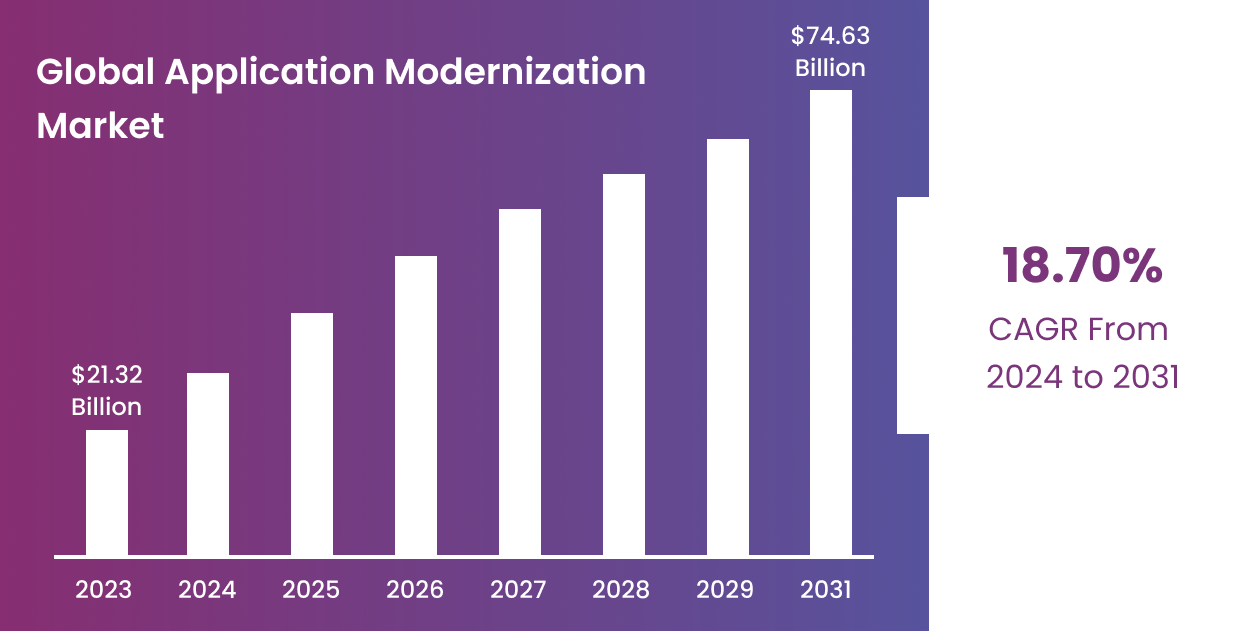
B2B companies also contribute to this growth by modernizing their legacy eCommerce systems. They migrate outdated solutions to the latest technology platforms to gain a competitive edge.
eCommerce system modernization/re-platforming requires the right strategy to ensure the expected output. With an experienced B2B Digital Commerce Transformation Agency like ioVista, you can modernize your systems through a streamlined and process-driven approach.
Here are the 10 proven steps to ensure a successful B2B eCommerce system modernization.
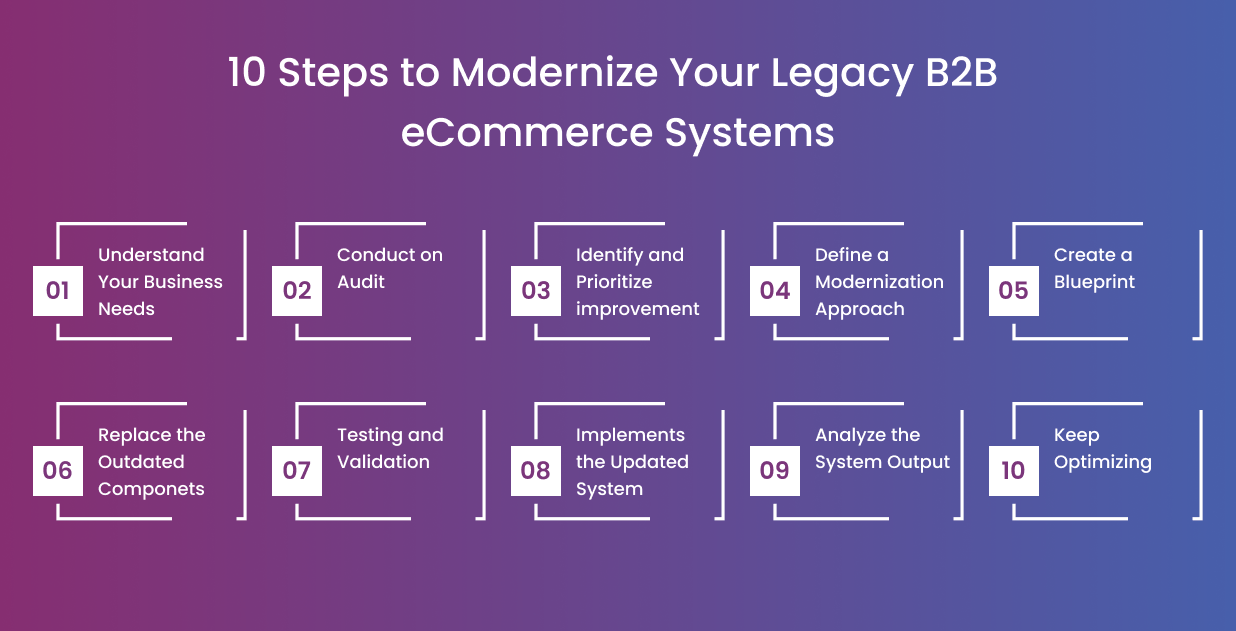
Step 1: Understand Your Business’s Specific Needs/Challenges
Every business has a specific set of requirements and challenges for system modernization. So the first step is to identify and understand your eCommerce needs.
Prepare a document of technical challenges/requirements to stay focused on the goals. While creating the list of requirements, consider the needs of each stakeholder who interacts with the system. You should consider legacy system modernization in the below scenarios.
Business Challenges
- Misaligned with Business Value
- Limited Scalability and Flexibility
- Insufficient Process Support
- Incompatible with Current & Future Needs
Technical Challenges
- Higher Maintenance Costs
- Extensive Technical Support
- Security or Compliance Risks
If you have more challenges, list them in a document and share it with the management team, so everyone can understand why modernization is required.
Share your requirements with the vendor. They can elaborate on your needs to design the right modernization strategy and create a road map for execution.
Step 2: Conduct an Audit of Your Legacy B2B eCommerce Systems
Once the requirements are defined, it’s time to conduct a technical audit of the legacy B2B eCommerce systems. ioVista, a leading digital transformation agency, can help you identify the areas where software performance is poor. Based on this analysis, we define the path for modernization that meets your requirements.
During the assessment, we evaluate different aspects including:
- Understanding the gap between users’ requirements and capabilities of an outdated system
- Defining total expenses of the legacy system
- Calculating total expenses of the legacy system
- Analyzing the health of your IT ecosystem
- Assessing integration efficiency
- Performing risk assessment in terms of modernization impacts and costs
Step 3: Determine the Areas of Improvement and Prioritize Them
Technical assessment helps find areas of poor performance in your system and take the right actions for improvement. Prioritization allows you to work on critical areas urgently during the modernization. You can consider the least crucial aspects later on.
For instance, if you want to boost employee productivity, the focus should be workflow automation. In case you want to reduce security risk, the plan of action should be defined around strengthening the security aspects of your B2B eCommerce systems.
Step 4: Define a Modernization Approach:
For system modernization, you need to pick the right approach.
Yes, every system has specific modernization requirements. To meet those requirements, you need to select the right approach. Let’s explore different modernization approaches.
Encapsulate – Extend the features of your legacy systems by making them available as services via an API.
Re-host – Instead of modifying any feature or functionality, the re-host approach focuses on changing the system’s infrastructure. You can deploy the system in a physical, virtual, or cloud environment.
Re-platform – Re-platforming allows you to migrate your legacy system to a new runtime platform. It requires a lot of changes in terms of features, functionality, and infrastructure.
Re-factor – Re-factor helps eliminate technical debt and improve nonfunctional attributes by optimizing or restructuring the existing code. It won’t allow you to make any changes to external behavior.
Re-architect – It’s about changing the code to make the system more efficient within the new architecture. You might need to make significant changes in the features and functionality too.
Re-build – In the re-build approach, you need to keep the original scope of the legacy solution as it is. But, you need to rewrite or design the application components from scratch.
Replace – As the name suggests, it’s about replacing the existing system with a new one. The new system is designed and developed based on the new requirements.
Step 5: Create a Blueprint for Modernization
Have you done selecting the modernization approach?
The next step is to create a. blueprint for system modernization. Define the estimated project progress in different development phases. It should also cover the milestones that need to be attained during the development life cycle. Under the blueprint, you can consider:
- Following the agile development approach where the project is managed into sprints
- Providing a high-level overview of milestones for each sprint that will be achieved during the development
- List down the dependencies of modernization that could impact the development and deployment of new applications
- For successful software development, connect with internal and external stakeholders who are subject matter experts
Step 6: Replace the Outdated Components with New Ones
From here, the execution part starts. In the B2B eCommerce systems modernization, you can divide the development into two major parts:
- Implementing New Components
- Replacing Outdated Components
Implementing New Components:
To build the new B2B eCommerce components, you should select the right eCommerce technology platform such as Magento, Shopify, BigCommerce, etc., that suits your modernization requirements.
Replacing Outdated Components:
Replacing the components of legacy systems with the latest technologies is risky. You have to decide which elements you want to keep and which ones you want to replace.
Working with a renowned B2B digital transformation agency like ioVista helps you transform your system modernization journey by suggesting the right technology and developing robust eCommerce solutions.
Step 7: Testing and Validation of Updated B2B eCommerce Systems
Once the development is over, perform rigorous testing for the updated B2B eCommerce systems. Testing ensures the updated system works seamlessly with the preferred IT environment and provides the expected output.
You need to perform manual and automated testing for:
- Code
- Data Integrity
- User Acceptance
If you encounter any issues during testing, ensure to resolve them before deployment.
Step 8: Implement the Updated System
A proper deployment plan ensures effective implementation and integration of the updated system.
Ideally, the solution should be deployed in stages. After each stage, ask your internal team to check the system, analyze the performance of the software backend, and share feedback. This practice reduces risk and ensures continuous improvement that helps you attain successful system deployment.
Step 9: Analyze the System Output After Modernization
Sit back and relax. You have done the technical part. Now, you need to observe the output delivered by modernized B2B eCommerce systems. The updated version of the system must meet your business goals by facilitating you with:
- Scalability
- Agility
- Flexibility
- productivity & Efficiency
- Reducing Security Risks
- Improving User Responses
- Minimizing Costs
Step 10: Make the Required Changes as Needed
After deploying the system, continuously monitor its performance. If there is any expectation gap, make the required adjustments to fill the gap.
Do you Want to Modernize Your Legacy B2B eCommerce System?
What are you waiting for if your obsolete B2B eCommerce systems hold you back from growing?
Partner with a leading B2B Digital Transformation Agency like ioVista which has 20 years of experience in helping brands modernize their Legacy B2B eCommerce Systems. Leverage our hands-on experience working with leading eCommerce technologies including Magento, Adobe Commerce, BigCommerce, Shopify, and more.
having proven expertise in offering B2B eCommerce system modernization, we help B2B companies transform their legacy systems by providing end-to-end consulting, strategy, and implementation services. We integrate critical B2B features to digitize and streamline all your B2B processes and operations.
Are you ready to enhance your operational efficiency? Connect with ioVista to modernize your outdated B2B eCommerce systems.
Frequently Asked Questions
What is a Legacy System?
The legacy system is a collection of outdated IT infrastructure, architecture, processes, software, tools, and technologies. They can be software or hardware installed in a monolithic environment.
Though legacy systems are useful and work fine, they can be expensive to operate and maintain. In the long run, such systems hamper the company’s operational efficiency and potential for innovation.
What is Legacy Modernization?
Legacy modernization is the process of upgrading an entire system that an organization is still using. The objective of modernization is to make the existing system compatible with the latest technology standards and modern platforms.
Which Legacy System Modernization Approach is Right for My Business?
It is difficult to provide an accurate answer for this without analyzing the performance of your existing systems. It also depends on the level of change you want to bring into your digital space. Based on your requirements, you can go for a less disruptive approach or select a complete overhaul.
Mike Patel

Mike Patel is the Founder and CEO of ioVista, a leading digital commerce agency specializing in eCommerce solutions. With a strong background in business and technology, Mike Patel has been at the forefront of driving digital transformations for businesses. He has successfully navigated the ever-changing landscape of eCommerce, helping companies leverage the power of online platforms to grow their brand, increase revenues, and optimize their digital presence. Under his leadership, ioVista has become a trusted partner with major technology companies: Adobe/Magento, Google, BigCommerce, Shopify, and Yahoo. He is dedicated to staying ahead of industry trends, adopting cutting-edge technologies, and continuously improving strategies to provide clients with a competitive edge. Mike’s commitment to excellence and client satisfaction is evident in every project ioVista undertakes.
Popular Posts
-
 B2B, E-Commerce, Web Development
Adobe Commerce Security Update APSB25-50: Key Highlights
Mike Patel
11 Jun 2025 -
 B2B, E-Commerce, Web Development
B2B Excellence Starts with Adobe Commerce (Magento) - Not WooCommerce
Mike Patel
03 Jun 2025 -
 B2B, E-Commerce, Web Development
AI and ML in B2B: A Vision for the Future of Commerce by 2025
Mike Patel
27 May 2025 -
 B2B, E-Commerce, Web Development
20 Next-Gen B2B eCommerce Features that will Dominate in 2025
Mike Patel
20 May 2025 -
 B2B, E-Commerce, Web Development
WooCommerce to BigCommerce Migration Fuels Your B2B eCommerce Growth
Mike Patel
06 May 2025 -
 B2B, E-Commerce, Web Development
Adobe Commerce SaaS: How Will It Empower Your eCommerce Business?
Mike Patel
22 Apr 2025 -
 B2B, E-Commerce, Web Development
Leverage ERP Integration to Scale Your B2B eCommerce Business in 2025
Mike Patel
15 Apr 2025 -
 B2B, E-Commerce, Web Development
Adobe Commerce Security Update APSB25-26: All You Need to Know
Mike Patel
10 Apr 2025 -
 B2B, E-Commerce, Web Development
Adobe Commerce 2.4.8 Release: Key Highlights
Mike Patel
10 Apr 2025 -
 B2B, E-Commerce, Web Development
Why Scaling Business Should Migrate WooCommerce Stores to Shopify
Mike Patel
08 Apr 2025 -
 B2B, E-Commerce, Web Development
Why Does Adobe Commerce (Magento) Lead the Way of B2B eCommerce
Mike Patel
18 Mar 2025 -
 B2B, E-Commerce, Web Development
10 Key Drivers of Digital Transformation in B2B eCommerce for 2025
Mike Patel
04 Mar 2025 -
 B2B, E-Commerce, Web Development
5 Leading eCommerce Platforms to Build Scalable B2B Customer Portals
Mike Patel
25 Feb 2025 -
 B2B, E-Commerce, Web Development
Google Search Ranking Volatility: All You Need to Know
Mike Patel
18 Feb 2025 -
 B2B, E-Commerce, Web Development
Adobe Commerce Security Update APSB25-08: All You Need to Know
Mike Patel
13 Feb 2025 -
 B2B, E-Commerce, Web Development
7 Strategic Benefits of an Online B2B Customer Portal
Mike Patel
11 Feb 2025 -
 B2B, E-Commerce, Web Development
What Makes a Great Online B2B Customer Portal? Top 10 Features to Know
Mike Patel
04 Feb 2025 -
 B2B, E-Commerce, Web Development
Legacy B2B eCommerce Systems Slowing You Down? It's Time for Modernization
Mike Patel
28 Jan 2025 -
-
 B2B, E-Commerce, Web Development
Security Update Available for Adobe Commerce | APSB24-90
Mike Patel
20 Nov 2024 -
 B2B, E-Commerce, Web Development
Why Choose Hyvä Enterprise for Your Adobe Commerce Store?
Mike Patel
19 Nov 2024 -
 B2B, E-Commerce, Web Development
Security Update APSB24-73 for Adobe Commerce: Everything You Need to Know
Mike Patel
14 Oct 2024 -
-

-
 B2B, E-Commerce, Web Development
Hyvä Theme for Magento 2: Uncover Powerful Features – Evaluate Pros and Cons
Mike Patel
16 Jul 2024 -
 B2B, E-Commerce, Web Development
Magento 2.4.7: Explore the Newest Enhancements and Features
Mike Patel
30 Apr 2024 -
 B2B, E-Commerce, Web Development
Magento 2.4.6-p5: Enhancing Stability and Security
Mike Patel
22 Apr 2024 -
 B2B, E-Commerce, Web Development
Everything You Need To Know About eCommerce SEO in 2024
Mike Patel
16 Apr 2024 -
 B2B, E-Commerce, Web Development
The Impact of Site Speed on eCommerce SEO Performance
Mike Patel
14 Feb 2024 -
 B2B, E-Commerce, Web Development
ioVista Attains B2B Specialization on BigCommerce
Mike Patel
30 Oct 2023 -

-
 B2B, E-Commerce, Web Development
It’s Official: ioVista Has Become a Recognized Adobe Specialized Partner
Mike Patel
05 Sep 2023 -
-
 B2B, E-Commerce, Web Development
Why Are You Still Using Yahoo Stores in 2023?
Mike Patel
05 Jul 2023 -
 B2B, E-Commerce, Web Development
ioVista Announced as a 2023 Local Excellence Award Winner by UpCity
Mike Patel
09 May 2023 -

-
-
 B2B, E-Commerce, Web Development
Questions You Should Ask Your Magento Agency
Mike Patel
17 Feb 2023 -
 B2B, E-Commerce, Web Development
7 Proven Strategies to Increase B2B/Wholesale eCommerce Revenue
Mike Patel
01 Feb 2023 -
 B2B, E-Commerce, Web Development
10 eCommerce Trends to Increase your Sales in 2023
Mike Patel
12 Jan 2023 -
 B2B, E-Commerce, Web Development
B2B eCommerce Features Your Store Need in 2023
Mike Patel
05 Jan 2023 -
 B2B, E-Commerce, Web Development
Adobe/Magento Highlights 2022 - Is your store Up-to-Date
Mike Patel
20 Dec 2022 -
 B2B, E-Commerce, Web Development
BigCommerce Releases StagingPro for Enterprise Merchants and Agency Developers
Mike Patel
15 Dec 2022 -
 B2B, E-Commerce, Web Development
Adobe discontinues Support for the 2.4.0-2.4.3 Release Line
Mike Patel
09 Dec 2022 -
 B2B, E-Commerce, Web Development
BFCM Round-Up – Get Your Store Ready for Christmas 2022!
Mike Patel
07 Dec 2022 -
 B2B, E-Commerce, Web Development
Universal Analytics Going Away: What Does it Mean, What you need to Do?
Mike Patel
24 Nov 2022 -
 B2B, E-Commerce, Web Development
40% of Magento and Adobe Commerce Websites at Risk in November 2022
Mike Patel
17 Nov 2022 -
 B2B, E-Commerce, Web Development
Website Support: How Can ioVista Help keep your Store Up and Running During Holidays
Mike Patel
17 Nov 2022 -

-
 B2B, E-Commerce, Web Development
Adobe Releases Critical Security Patches for Magento 2.4.5 and 2.4.4
Mike Patel
27 Oct 2022 -

-
 B2B, E-Commerce, Web Development
ioVista is Sponsoring the Largest eCommerce Event in Dallas
Mike Patel
07 Oct 2022 -
 B2B, E-Commerce, Web Development
Magento 2 Vulnerability: Surge in Hacking on Unpatched Stores
Mike Patel
27 Sep 2022 -
 B2B, E-Commerce, Web Development
Get your Holiday eCommerce Marketing Started with These 5 Tips
Mike Patel
15 Sep 2022 -
 B2B, E-Commerce, Web Development
Why a Magento Code Audit is Essential for your eCommerce Store
Mike Patel
10 Sep 2022 -

-
 B2B, E-Commerce, Web Development
Choosing the Right eCommerce Platform for B2B
Mike Patel
25 Aug 2022 -
 B2B, E-Commerce, Web Development
The Challenges of eCommerce in Manufacturing and how to Overcome them
Mike Patel
17 Aug 2022 -
 B2B, E-Commerce, Web Development
Adobe Releases Magento Open Source and Adobe Commerce 2.4.5
Mike Patel
10 Aug 2022 -
-
-
-
 B2B, E-Commerce, Web Development
The Growth of eCommerce and its impact on the Manufacturing Industry
Mike Patel
01 Jul 2022 -
 B2B, E-Commerce, Web Development
The Future of Manufacturing Business is Digital
Mike Patel
24 Jun 2022 -
 B2B, E-Commerce, Web Development
Magento Open Source Vs Commerce Vs Cloud: How to Pick your Edition
Mike Patel
14 Jun 2022 -
 B2B, E-Commerce, Web Development
Is your Store Optimized? How do you Measure eCommerce Conversion Rates?
Mike Patel
11 May 2022 -
 B2B, E-Commerce, Web Development
ioVista Recognized for B2B Services: Excellence Award Winner 2022
Mike Patel
03 May 2022 -
 B2B, E-Commerce, Web Development
How to Optimize Your eCommerce Store for Conversions
Mike Patel
29 Apr 2022 -
 B2B, E-Commerce, Web Development
BigCommerce Strengthens Its Hold in B2B eCommerce Landscape: Acquires Bundle B2B
Mike Patel
27 Apr 2022 -
 B2B, E-Commerce, Web Development
Future Proof your Digital Commerce with Headless Commerce
Mike Patel
21 Apr 2022 -
 B2B, E-Commerce, Web Development
Adobe Commerce 2.4.4 Release: Faster, Better, More Scalable
Mike Patel
13 Apr 2022 -
 B2B, E-Commerce, Web Development
Adobe Commerce and Magento 1 Sites at Risk: Magento Vulnerabilities Exploited
Mike Patel
29 Mar 2022 -
 B2B, E-Commerce, Web Development
Is Your Business Ready for Digital Transformation? The Key Steps!
Mike Patel
01 Mar 2022 -
-
 B2B, E-Commerce, Web Development
February 2022, over 500 Legacy Magento 1 Websites Hacked!
Mike Patel
15 Feb 2022 -
 B2B, E-Commerce, Web Development
Progressive Web App: A well-established Approach to Architecting a Modern Website
Mike Patel
11 Feb 2022 -
 B2B, E-Commerce, Web Development
Adobe released a new End of Support Date for Magento 2.3.x
Mike Patel
04 Feb 2022 -
 B2B, E-Commerce, Web Development
The How & Why: Successful Data-Driven Marketing for eCommerce Stores
Mike Patel
13 Jan 2022 -
 B2B, E-Commerce, Web Development
How to Find Right Audience for your Online Business
Mike Patel
10 Jan 2022 -
 B2B, E-Commerce, Web Development
5 Key Reasons to Enable Social Commerce Channels for your Store
Mike Patel
17 Dec 2021 -
 B2B, E-Commerce, Web Development
ioVista is honored to be one of the Top 1000 Companies 2021
Mike Patel
13 Dec 2021 -
 B2B, E-Commerce, Web Development
Are Your FB, Instagram, Pinterest Accounts Geared for Social Shopping?
Mike Patel
30 Nov 2021 -
 B2B, E-Commerce, Web Development
Five BFCM Strategies Merchants Love To Implement For Holidays
Mike Patel
26 Oct 2021 -
 B2B, E-Commerce, Web Development
How to Meet Holiday Shoppers’ Needs With an Omnichannel Approach
Mike Patel
20 Oct 2021 -
 B2B, E-Commerce, Web Development
Support for Magento Commerce 2.3 and Magento Open Source 2.3 Ends
Mike Patel
05 Oct 2021 -
 B2B, E-Commerce, Web Development
Why your Business Needs Marketing Automation this Holiday Season
Mike Patel
30 Sep 2021 -
 B2B, E-Commerce, Web Development
How Augmented Reality can Deliver more Engaging Shopping Experiences
Mike Patel
21 Sep 2021 -
 B2B, E-Commerce, Web Development
These 5 Local Business Marketing Strategies Will Transform Your Business
Mike Patel
17 Sep 2021 -
 B2B, E-Commerce, Web Development
How eCommerce can be the Game Changer for Warehouses
Mike Patel
08 Sep 2021 -
 B2B, E-Commerce, Web Development
Magento 2.4.3 has arrived! Everything you Need to Know
Mike Patel
11 Aug 2021 -
 B2B, E-Commerce, Web Development
ioVista named 2021 Top B2B Company in Dallas and Texas
Mike Patel
05 Aug 2021 -






Let’s work together to create outstanding digital experiences.
With 20+ years of industry experience, ioVista understands your eCommerce needs and delivers best-in-class solutions that help you gain a competitive edge.
or Call us at: +1 214-699-4391

TOP
Get in Touch