


How to Overcome the top 4 challenges of running an eCommerce Business
17 Feb 2015
 Mike Patel

Whether you’re just getting started or have been running an online business for a while, you’ve probably faced some common challenges that many online retailers deal with at some point or another. This article will review four of the most common challenges of running an online store and share some strategies to help you overcome them.
1. Competing with big businesses: Amazon, Ebay, Target, Walmart and more…
Anyone working in retail knows that there’s always competition, especially with behemoths like Amazon and Ebay who seemingly offer any product under the sun. You may even hear from customers who say, “I can get it on Amazon cheaper.” So what can you do?
- Follow your competition.
Whether that’s Amazon or some other retailer, get on your competitions’ mailing list or make a point to check out their site regularly. Watch what sales they run or what kind of shipping and return policies they have. You might not be able to beat all their offers or even offer the exact same deals but you can find ways to compete.
For example, if your competition regularly offers free shipping but that would be too costly to you, maybe you can implement a free shipping threshold. This means, you make it clear that if your customers spend at least $25 or some other amount, they will qualify for free shipping. That way, you can control how your free shipping works a little more and you encourage your customers to buy more to get the best deal.
- Take advantage of your biggest advantage – your size.
Sometimes it’s good not to be the big guy. Perhaps you provide a niche product they don’t or that’s something you could do. This would be a great thing to call a ton of attention to. Any way you stand out is something to highlight on your site.
Depending on your volume, you could also take advantage of having more time per customer than a larger site. You could add a chat feature to answer customer questions in real-time. You could do some research and send more targeted emails to smaller groups or even individuals. You might come up with a contest your customers can participate in to win a product or gift card. In other words, if you have more time for your customers than your competition, you can get creative and really use this to your advantage.
2. Getting traffic / Lack of visitors
- SEO
I know. You keep hearing all about SEO. It’s a very common topic when it comes to eCommerce and web traffic. But the fact is, it’s a huge part of getting traffic to your site and if you lack visitors, it should be one of the first things you look at. Aside from hiring an SEO expert, there are some other steps you can take to help your site. The more content you have, the better off you are. The more relevant that content is, the better off you are. Google, Yahoo, Bing and other search engines look at your site to determine what it’s about – the more information you have to give, the more likely your store will pop up in searches related to that information.
Some tips for adding relevant content:
- Whenever you write anything, use words your customers would use.
- Write at least 100 words for each product description.
- Add product reviews and/or product guides
- Write blog posts about your products or services
- PPC Ads
If you’re not getting enough traffic through organic search, paid ads could give you the boost you’re looking for. PPC ads can be quite powerful and can be tailored to your budget. Hiring someone to take care of your campaign can be very helpful but if you opt to do it yourself, think about what would catch your customers’ attention. Focus on benefits or solutions your products provide when crafting your ads.
- Product Listing Ads (PLAs)
PLAs are similar to PPC ads because they’re paid advertising powered by search engines. These ads are the ones with pictures and prices showing. They’re obviously ads but the reason they’re so effective is that they will showcase your products right next to your competition. If you have the better price or the better product, you can win a sale before a customer even clicks your ad. Not only that, potential customers get to see your product even if they haven’t heard of your store before.
3. Earning Customer Trust
- Looks are important.
Here’s where it’s important to try and look at your site with a critical eye. Even better? Let someone you trust take a look at your site and ask them for their honest feedback. If someone has never shopped with you before, it’s important that your site looks trustworthy. It’s the “face” of your business online. If your site looks modern, is easy to navigate, has great content and gives a good impression, it goes a long way in turning a visitor into a buyer.
- Security.
BEING secure is important for all the obvious reasons. Of course you wouldn’t want your site to succumb to a virus or for your customers’ personal information to be hacked. But looking secure is very important when it comes to making sales too. Your site may be secure but if it doesn’t LOOK secure, customers who’ve never done business with you may hold back.
Most if not all site security providers offer seals that you can put on your site (like Norton’s or McAfee) to give customers’ peace of mind. If you don’t have that, make sure that you are telling your customers how your site is secure or that you’re not going to share or sell their information. Any way you can make customers feel safe on your site goes a long way to helping you get more sales.
Also, it matters how your site is designed. A site that looks old gives the impression that it’s not secure. So if your site was designed more than a few years ago, it’s probably time to look into redesign or at the very least, updates and upgrades to your site features.
- Have transparent policies.
Make sure your site clearly explains your shipping and return policies and that it’s very easy for customers to find them. If a customer isn’t 100% sure about an item they’re buying, the site that offers the best return policy will get the sale. If your site has a great return policy,
4. Shopping Cart Abandonment/ Increasing Conversion Rates
- Usability.
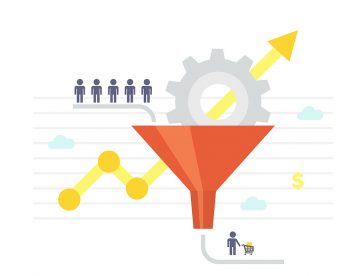
Every part of your site should be working to move customers through your sales funnel: from finding the item they want to getting into the checkout process and completing the transaction. For this, it’s best to ask someone you trust to go through your site. Ask them to find a certain item and go through the whole sales process. Ask them to note anywhere they got stuck or if anything confused them a bit. You’re probably too familiar with your site to notice anything that might be holding others up. ioVista regularly performs Usability Audits for clients for exactly this reason. An ideal ecommerce site is designed with its core audience in mind – it needs to work how they expect or need it to.
- Accept a variety of payment options.
The more payment options you accept, the more sales you will get. Some people are fine using their credit cards but others prefer PayPal. When it comes to credit cards, try and offer as many as you can: Visa, MasterCard, Discover, American Express.
- Have transparent policies.
As stated in the earning trust section above, if customers feel your store is trustworthy, they’re more likely to buy from you and complete their transaction. If you notice a lot of customers abandoning their carts in the same step of the sales process. Analyze everything about that step and see what you can test adding or taking away. Maybe it could be as simple as putting the details of your “no hassle refund guarantee” on that page.
Running an eCommerce site can be very rewarding but it does come with its share of challenges. This article covered some of the most common challenges but there certainly can be others. Plus, we know your business is unique. If you’d like more specific insight into your business, call or email us and we’d be happy to help you find solutions to any eCommerce challenges you’re facing.
Mike Patel

Mike Patel is the Founder and CEO of ioVista, a leading digital commerce agency specializing in eCommerce solutions. With a strong background in business and technology, Mike Patel has been at the forefront of driving digital transformations for businesses. He has successfully navigated the ever-changing landscape of eCommerce, helping companies leverage the power of online platforms to grow their brand, increase revenues, and optimize their digital presence. Under his leadership, ioVista has become a trusted partner with major technology companies: Adobe/Magento, Google, BigCommerce, Shopify, and Yahoo. He is dedicated to staying ahead of industry trends, adopting cutting-edge technologies, and continuously improving strategies to provide clients with a competitive edge. Mike’s commitment to excellence and client satisfaction is evident in every project ioVista undertakes.
Popular Posts
-

-
 E-Commerce
B2B Excellence Starts with Adobe Commerce (Magento) - Not WooCommerce
Mike Patel
03 Jun 2025 -

-
-
 E-Commerce
WooCommerce to BigCommerce Migration Fuels Your B2B eCommerce Growth
Mike Patel
06 May 2025 -
-
 E-Commerce
Leverage ERP Integration to Scale Your B2B eCommerce Business in 2025
Mike Patel
15 Apr 2025 -
-
-
-
-
 E-Commerce
10 Key Drivers of Digital Transformation in B2B eCommerce for 2025
Mike Patel
04 Mar 2025 -
 E-Commerce
5 Leading eCommerce Platforms to Build Scalable B2B Customer Portals
Mike Patel
25 Feb 2025 -
-
-
-
 E-Commerce
What Makes a Great Online B2B Customer Portal? Top 10 Features to Know
Mike Patel
04 Feb 2025 -
 E-Commerce
Legacy B2B eCommerce Systems Slowing You Down? It's Time for Modernization
Mike Patel
28 Jan 2025 -
-
-
-
 E-Commerce
Security Update APSB24-73 for Adobe Commerce: Everything You Need to Know
Mike Patel
14 Oct 2024 -
-

-
 E-Commerce
Hyvä Theme for Magento 2: Uncover Powerful Features – Evaluate Pros and Cons
Mike Patel
16 Jul 2024 -
-

-
-
-

-
-
 E-Commerce
It’s Official: ioVista Has Become a Recognized Adobe Specialized Partner
Mike Patel
05 Sep 2023 -
-

-
 E-Commerce
ioVista Announced as a 2023 Local Excellence Award Winner by UpCity
Mike Patel
09 May 2023 -
-
-

-

-

-
-

-
 E-Commerce
BigCommerce Releases StagingPro for Enterprise Merchants and Agency Developers
Mike Patel
15 Dec 2022 -

-
-
 E-Commerce
Universal Analytics Going Away: What Does it Mean, What you need to Do?
Mike Patel
24 Nov 2022 -
 E-Commerce
40% of Magento and Adobe Commerce Websites at Risk in November 2022
Mike Patel
17 Nov 2022 -
 E-Commerce
Website Support: How Can ioVista Help keep your Store Up and Running During Holidays
Mike Patel
17 Nov 2022 -
-
 E-Commerce
Adobe Releases Critical Security Patches for Magento 2.4.5 and 2.4.4
Mike Patel
27 Oct 2022 -

-
-
-

-

-
-

-
 E-Commerce
How BigCommerce makes it easy for Legacy Businesses to get started with B2B eCommerce
Mike Patel
23 Aug 2022 -
 E-Commerce
The Challenges of eCommerce in Manufacturing and how to Overcome them
Mike Patel
17 Aug 2022 -
-
-
-
-
 E-Commerce
The Growth of eCommerce and its impact on the Manufacturing Industry
Mike Patel
01 Jul 2022 -

-
 E-Commerce
Magento Open Source Vs Commerce Vs Cloud: How to Pick your Edition
Mike Patel
14 Jun 2022 -
 E-Commerce
Is your Store Optimized? How do you Measure eCommerce Conversion Rates?
Mike Patel
11 May 2022 -

-

-
 E-Commerce
BigCommerce Strengthens Its Hold in B2B eCommerce Landscape: Acquires Bundle B2B
Mike Patel
27 Apr 2022 -

-
-
 E-Commerce
BigCommerce Releases Multi-Storefront: Multiple Brand Management within a Single Store
Mike Patel
01 Apr 2022 -
 E-Commerce
Adobe Commerce and Magento 1 Sites at Risk: Magento Vulnerabilities Exploited
Mike Patel
29 Mar 2022 -

-
 E-Commerce
ioVista named as Dallas’ most Recommended and Reviewed Digital Strategy Companies 2022
Mike Patel
24 Feb 2022 -

-

-
 E-Commerce
Progressive Web App: A well-established Approach to Architecting a Modern Website
Mike Patel
11 Feb 2022 -
-
 E-Commerce
How to Improve Internal Site Search for Better Mobile Conversions: 7 Proven Strategies
Mike Patel
27 Jan 2022 -
 E-Commerce
The How & Why: Successful Data-Driven Marketing for eCommerce Stores
Mike Patel
13 Jan 2022 -

-

-

-
 E-Commerce
Are Your FB, Instagram, Pinterest Accounts Geared for Social Shopping?
Mike Patel
30 Nov 2021 -

-

-

-
-
 E-Commerce
How Augmented Reality can Deliver more Engaging Shopping Experiences
Mike Patel
21 Sep 2021 -
 E-Commerce
These 5 Local Business Marketing Strategies Will Transform Your Business
Mike Patel
17 Sep 2021 -
-
-

-


Let’s work together to create outstanding digital experiences.
With 20+ years of industry experience, ioVista understands your eCommerce needs and delivers best-in-class solutions that help you gain a competitive edge.
or Call us at: +1 214-699-4391

TOP
Get in Touch