


How To Make Your E-commerce Store Stand Out With Emerging Technology Trends 2020
18 Feb 2020
 Mike Patel
It seems like the world of technology is only speeding up these days. Innovation is coming at us faster and faster than ever before. As soon as one new idea springs to life and makes its way to the public, it’s almost like it becomes obsolete as another great idea takes its place. This amount of rapid progress and change makes it only natural to speculate about what’s next on the horizon. Also a new year is a perfect time to look ahead to see what the next year might bring to your e-commerce store development. As 2020 continues, it’s time to take a look at what we can expect from the world of technology in the year ahead.
Voice Assistants and Smart Speakers
The past few years have seen a digital revolution when it comes to voice assistants. What once seemed like a gimmick has become an integral part of our everyday life, with more voice assistants being launched every day. We now have Siri, Google and Alexa with a host of others trying to edge in on this area. Every new device comes with new capabilities and tricks, which are soon copied and passed from platform to platform.
The result? An ever-growing field of voice assistants who are able to do an ever-increasing amount of things.
You can expect this trend to continue in 2020. The experts at Google, Amazon, and Apple (as well as those other places) are hard at work integrating new features in their devices, working on everything from streamlining conversations to more multi-user functionality.
One area of focus you can expect to hear more about is that of security. With voice assistants taking over more and more of our lives, being used now to plan everything from where we eat to how we spend our free time — and being used to pay for it — you can expect that people will become more concerned with how that data is shared. Security is already a concern with a majority of users, so you can only assume those concerns will grow as the year unfolds.
Another emerging trend in the world of voice assistants and smart speakers is that of video. The entry of Facebook Portal, along with the Google Hub and Echo Show has turned the idea of a “smart speaker” into a video screen, capable of displaying videos, websites and even handling face-to-face calls. Each platform has also introduced its own version of a video calling platform (Duo from Google, for example). You can expect to see more integration with these smart screens as 2020 continues.
Smart Devices and Appliances
Even though 2019 saw a rise in smart speakers, it might go down in history as the year the “internet of things” really came home for the average consumer. One minute the idea of the smart light bulb was brand-new and awe-inspiring; now, we have smart coffee makers and integrated microwaves and refrigerators that can order groceries for you — and the list goes on. We are truly seeing the rise of the smart home, and it’s exciting to see where this can take us.
It’s not perfect yet, though. One issue is that every smart device or appliance that you buy comes with its own platform, quirks, and compatibility issues. If you buy ten different smart appliances, for example, you have ten different integration issues to worry about. We have yet to see a truly smart home — all we have so far are homes full of separate smart devices.
One emerging trend on the horizon is the race to address this issue. This comes mainly in the form of cross-compatibility. While it makes sense that brand manufacturers want to try and tie you down to one line of products, the reality is that our world doesn’t work that way. Compatibility across platforms with a multiplicity of devices means good things for manufacturers as they find their devices working in more and more spaces. This means as the number of smart devices expands in the home, more and more of them are going to have to learn to work together to create a more meaningful experience for the user.
Another solution we should be on the lookout for is a smart home — a house that comes pre-furnished with smart devices, all connected and talking to each other through a central hub or server that offers the owner a seamless experience.
Smart devices such as these aren’t only limited to the home, however. We’re seeing smart tech in our cars, in our offices and even in vending machines. As 2020 continues you can expect to see more of this tech in virtually every corner of this society. As this grows, the same compatibility issues are going to rise. How are all of these devices going to talk to each other when they all run on different networks and servers? This could be one of the big questions moving forward.
Augmented and Virtual Reality
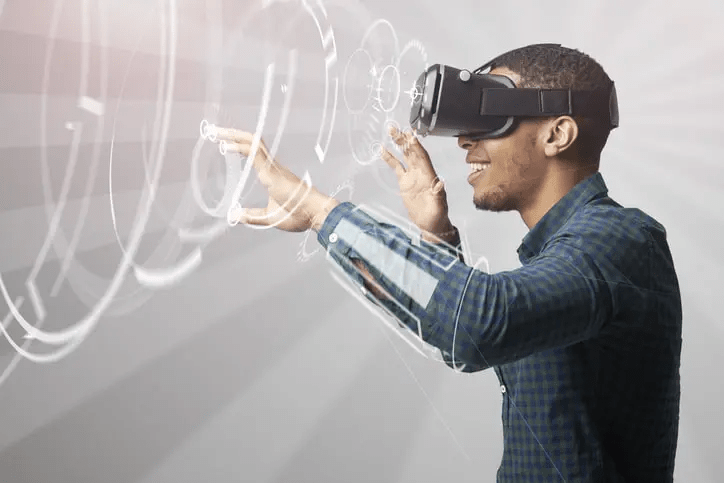
After waiting in the wings for most of its existence, 2020 might be the year that virtual reality finally makes its way to the general public. After years of being nothing more than a gaming trick, virtual and augmented reality is finally living up to its original promise of being able to offer us a glimpse into the world of possibilities. With an increasing focus on VR, we are now able to use this technology for a variety of purposes, and we can expect to see this develop even more in 2020.
The Playstation VR and Oculus View have demonstrated the power of VR in the gaming world, but we are really only starting to scratch the surface of how VR can enhance our daily experiences.
Imagine a surgeon being trained in the latest techniques through a virtually reconstructed body, perfect down to each detail, or a mechanic learning how to fix an engine without ever having to get his or her hands dirty. This is possible now, but this is only the beginning of how VR can be used in the classroom, providing real-world experience under conditions that can be monitored and adjusted as needed. You can expect more of these scenarios to be developed as companies and industries see the value of this kind of training.
VR is also expected to emerge as a leader in indoor navigation — mapping out multi-story buildings and complexes that cannot be mapped through satellites and other traditional means. This technology can be used to find your way through an area, but it also has other uses, too, such as locating people or objects in large, otherwise un-searchable areas.
VR has already started to be used for shopping — this will only escalate as the year progresses. Expect to be able to use VR for anything from choosing the paint to seeing how the latest fashions will look on you or a loved one.
Artificial Intelligence
All of this, in one way or another, boils down to the advances that have been made, and continue to be made, in artificial intelligence. AI is the real innovation, allowing all of these other products, from smart speakers to augmented reality, to exist in the first place. 2020 will see artificial intelligence continue to develop and play a larger and larger role in our everyday life.
Those who have been worried that AI will one day “do the thinking for us” might start to find their fears justified. Expect AI to show up and become a decision-maker in more industries this year, including healthcare — where AI technology can lead to faster, more accurate diagnoses and treatments. This could find us saving money as our visits to the doctor become more beneficial and take less time.
Another industry expected to see a boost in AI implementation is manufacturing. AI can help to modernize the production line, resulting in a more efficient process that cuts down on waste and drives down costs.
Much like security will be an emerging topic as voice assistants continue to see growth, we can also expect similar concerns as AI grows and develops. Ethical issues surrounding AI and its use took center stage in many discussions for the first time in 2019; we should expect to see and hear more about this topic in 2020. Trust and other ethical concerns will become a major player in the discussion of AI and its role in our lives.
Another trend to see in 2020 will be the use of AI to create AI — in other words, artificial intelligence has become smart enough to design and augment itself. Developers are now using AI to help create the next generation of AI, which could result in pushing this technology in new and innovative directions at an ever-increasing rate.
As the Year Continues
While it might be impossible to know exactly what to expect in the year to come, one thing’s for certain: these and other innovations will certainly give us something to talk about (and talk to).
Mike Patel

Mike Patel is the Founder and CEO of ioVista, a leading digital commerce agency specializing in eCommerce solutions. With a strong background in business and technology, Mike Patel has been at the forefront of driving digital transformations for businesses. He has successfully navigated the ever-changing landscape of eCommerce, helping companies leverage the power of online platforms to grow their brand, increase revenues, and optimize their digital presence. Under his leadership, ioVista has become a trusted partner with major technology companies: Adobe/Magento, Google, BigCommerce, Shopify, and Yahoo. He is dedicated to staying ahead of industry trends, adopting cutting-edge technologies, and continuously improving strategies to provide clients with a competitive edge. Mike’s commitment to excellence and client satisfaction is evident in every project ioVista undertakes.
Popular Posts
-

-
 E-Commerce
B2B Excellence Starts with Adobe Commerce (Magento) - Not WooCommerce
Mike Patel
03 Jun 2025 -

-
-
 E-Commerce
WooCommerce to BigCommerce Migration Fuels Your B2B eCommerce Growth
Mike Patel
06 May 2025 -

-
 E-Commerce
Leverage ERP Integration to Scale Your B2B eCommerce Business in 2025
Mike Patel
15 Apr 2025 -

-

-
-
-
 E-Commerce
10 Key Drivers of Digital Transformation in B2B eCommerce for 2025
Mike Patel
04 Mar 2025 -
 E-Commerce
5 Leading eCommerce Platforms to Build Scalable B2B Customer Portals
Mike Patel
25 Feb 2025 -

-
-

-
 E-Commerce
What Makes a Great Online B2B Customer Portal? Top 10 Features to Know
Mike Patel
04 Feb 2025 -
 E-Commerce
Legacy B2B eCommerce Systems Slowing You Down? It's Time for Modernization
Mike Patel
28 Jan 2025 -
-

-

-
 E-Commerce
Security Update APSB24-73 for Adobe Commerce: Everything You Need to Know
Mike Patel
14 Oct 2024 -

-

-
 E-Commerce
Hyvä Theme for Magento 2: Uncover Powerful Features – Evaluate Pros and Cons
Mike Patel
16 Jul 2024 -

-

-
-

-

-

-
 E-Commerce
It’s Official: ioVista Has Become a Recognized Adobe Specialized Partner
Mike Patel
05 Sep 2023 -
-

-
 E-Commerce
ioVista Announced as a 2023 Local Excellence Award Winner by UpCity
Mike Patel
09 May 2023 -

-
-

-

-

-
-
-
 E-Commerce
BigCommerce Releases StagingPro for Enterprise Merchants and Agency Developers
Mike Patel
15 Dec 2022 -

-

-
 E-Commerce
Universal Analytics Going Away: What Does it Mean, What you need to Do?
Mike Patel
24 Nov 2022 -
 E-Commerce
40% of Magento and Adobe Commerce Websites at Risk in November 2022
Mike Patel
17 Nov 2022 -
 E-Commerce
Website Support: How Can ioVista Help keep your Store Up and Running During Holidays
Mike Patel
17 Nov 2022 -

-
 E-Commerce
Adobe Releases Critical Security Patches for Magento 2.4.5 and 2.4.4
Mike Patel
27 Oct 2022 -

-

-
-

-

-

-

-
 E-Commerce
How BigCommerce makes it easy for Legacy Businesses to get started with B2B eCommerce
Mike Patel
23 Aug 2022 -
 E-Commerce
The Challenges of eCommerce in Manufacturing and how to Overcome them
Mike Patel
17 Aug 2022 -
-
-

-

-
 E-Commerce
The Growth of eCommerce and its impact on the Manufacturing Industry
Mike Patel
01 Jul 2022 -
-
 E-Commerce
Magento Open Source Vs Commerce Vs Cloud: How to Pick your Edition
Mike Patel
14 Jun 2022 -
 E-Commerce
Is your Store Optimized? How do you Measure eCommerce Conversion Rates?
Mike Patel
11 May 2022 -

-

-
 E-Commerce
BigCommerce Strengthens Its Hold in B2B eCommerce Landscape: Acquires Bundle B2B
Mike Patel
27 Apr 2022 -

-
-
 E-Commerce
BigCommerce Releases Multi-Storefront: Multiple Brand Management within a Single Store
Mike Patel
01 Apr 2022 -
 E-Commerce
Adobe Commerce and Magento 1 Sites at Risk: Magento Vulnerabilities Exploited
Mike Patel
29 Mar 2022 -

-
 E-Commerce
ioVista named as Dallas’ most Recommended and Reviewed Digital Strategy Companies 2022
Mike Patel
24 Feb 2022 -

-

-
 E-Commerce
Progressive Web App: A well-established Approach to Architecting a Modern Website
Mike Patel
11 Feb 2022 -

-
 E-Commerce
How to Improve Internal Site Search for Better Mobile Conversions: 7 Proven Strategies
Mike Patel
27 Jan 2022 -
 E-Commerce
The How & Why: Successful Data-Driven Marketing for eCommerce Stores
Mike Patel
13 Jan 2022 -

-

-

-
 E-Commerce
Are Your FB, Instagram, Pinterest Accounts Geared for Social Shopping?
Mike Patel
30 Nov 2021 -

-
-

-

-
 E-Commerce
How Augmented Reality can Deliver more Engaging Shopping Experiences
Mike Patel
21 Sep 2021 -
 E-Commerce
These 5 Local Business Marketing Strategies Will Transform Your Business
Mike Patel
17 Sep 2021 -

-

-

-



Let’s work together to create outstanding digital experiences.
With 20+ years of industry experience, ioVista understands your eCommerce needs and delivers best-in-class solutions that help you gain a competitive edge.
or Call us at: +1 214-699-4391

TOP
Get in Touch