


How To Improve Your Magento Store UX
19 Sep 2019
 Mike Patel
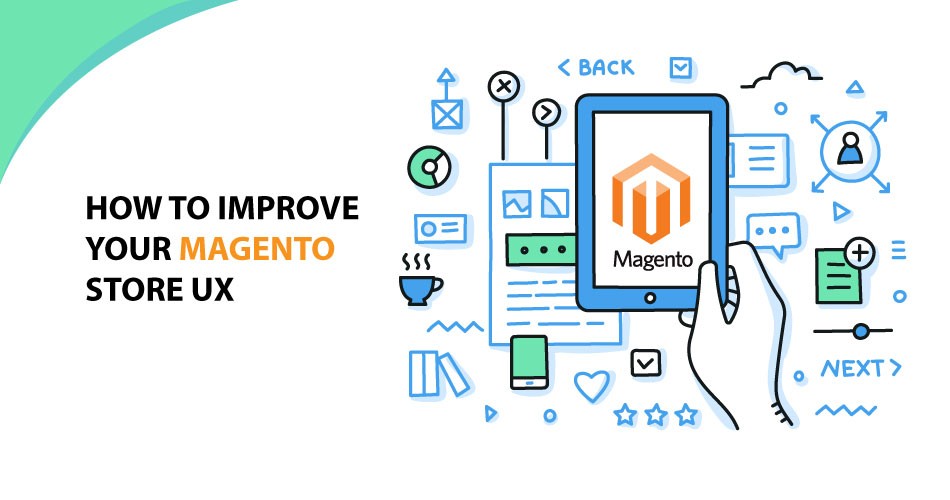
If you use Magento, then you already know it’s one of the most popular e-commerce platforms available on the market today. Magento is used in over 10% of all the e-commerce website development around the entire globe and handles over $150 million in transactions each year. For reasons like these, many website owners choose Magento to handle all of their e-commerce needs.
Having a strong platform like Magento doesn’t automatically guarantee success, however. Just like anything you build, the tools are only effective if you use them correctly. Magento is a great tool — when put to proper use. If you’ve been using Magento and it doesn’t seem to be working for you, there’s a good chance the problem is not Magento, but in the UX (User Experience) your website offers. This comes down to poor planning and designing, and not using tools effectively. Here are six tips to overcome this problem and offer your customers a better UX.
- Update Your Meta Descriptions
Before you give your customers a better UX, you have to make sure they find you in the first place. Unless the customer already has your specific website in mind as a destination, chances are he or she will find you as the result of a search. Meta descriptions are the short little “blurbs” that show up under a search result that give customers more information about your site. These meta descriptions can be important because they let potential consumers know if your site is what they’re looking for — provided the description is accurate, up to date and readable.
To get the most out of these, consider the following tried-and-true:
1) Keep your description between 50 and 160 characters. Anything longer will get cut off.
2) Don’t overload it with keywords. Believe it or not, engines will bury a website if it detects too much keyword padding.
3) Make it short, sweet and informative. Users will often make their decision based on meta descriptions!
4) Make sure each page of your website has its meta description. Sometimes you can set these to generate automatically, but honestly taking the time to write each one out is the best practice.
- Enable Social Media Login
If there’s one overarching theme that should be repeated time and time again when it comes to improving the UX, it’s the idea of streamlining processes. And one process that should be made easier and quicker is how to register and subsequently login. Users are tired of having to go through the typical rigamarole every time they go to a new website. It was fine when we only went to a few places, but the average user now visits something like 90 websites a month!
One recent trend in registration streamlining is allowing users to create accounts through their social media profile. This gives users the option to create a profile with just a few clicks, and then not have to worry about remembering their information later. Magento gives you the option to enable this feature.
- Minimize Clicks
As long as we’re talking about streamlining, let’s talk about the rest of the website experience. Sure, they can log on quick and easy now, but what happens once they get in? Going through page after page, click after click gets old and frustrating very quickly. Work on minimizing the number of times a consumer needs to click.
There are several ways to do this. Put more search results on the page at one time so there are fewer pages to scroll through. Reduce the number of times a customer has to click to get to a product (ideally, it should not be more than one click after a search, and never more than two). Make it easier for customers to go back by offering more intuitive navigation options, reducing the number of times someone needs to click the “back page” button.
Perhaps nowhere is this more important than when it comes to checkout. Many sales (some studies suggest that up to 25%) are lost simply because a customer gets fed up with the amount of time and work it takes to make a purchase. The average checkout process requires customers to fill in over a dozen form fields — many of which are unnecessary. Streamline this process by reducing the number of form fields, and then set Magento to condense the entire checkout process onto a single page. You’ll find fewer customers clicking away due to frustration.
- Enable Advanced Search and Filtering
Have you ever been to a website with a built-in search engine that just didn’t work right? A simple search would either return zero results or way too many that weren’t relevant. Considering how long they’ve been a part of our daily online experience, it’s amazing how difficult it can be to master the art of designing a proper search engine. Magento has tools to help your customers get the most out of their searches, but it’s up to you to implement them.
Allow your customers the opportunity to use advanced searches, looking for certain keywords while ignoring others. In addition to that, make sure that you enable your site to have a search bar available at the top of each page, and turn on the autofill feature that predicts customer input while they type. These two additions will help to make searching more convenient for your users, thereby leading to a better overall UX.
At the same time, allowing customers to filter their results by different criteria (including customer reviews, price, make/model, etc.) and sort them according to things like price gives them the ability to quickly and easily narrow down their search to the exact product they’re looking for.
- Show Customer Reviews
When a customer makes a purchase, there are a lot of different factors that go into making that decision. Price, quality, etc. — those are all obvious things that go into a decision like that. However, one of the biggest factors comes in the form of reviews — and not editorial reviews, blogging websites or manufacture comments.
Believe it or not, the most powerful and most influential type of review is the one left on a website by another customer. When someone who has used the product in a real-world situation leaves a review, they are imparting a real-world experience that has been tested through everyday use in all sorts of situations. They aren’t reviews that were tested in a laboratory or just copied off of some other website somewhere online.
Because of this, customer reviews are by far the most trusted form of product endorsement online, and yet so many ecommerce platforms choose to disable this feature for one reason or another. Turn this feature on to give your customers a chance to learn about the products you’re selling.
- Add Wishlists
Did you know that with Magento you can allow your customers to create and maintain wishlists? This isn’t a feature that everyone would consider, and yet some large ecommerce sites have turned the wishlist into a strong part of their overall sales. Enable the wishlist feature and allow your customers the chance to dream. As they fill up their list, this gives you yet another way to keep in touch with them and encourage their business.
Wishlists can be used in many different ways. Send reminders out to your customers via email from time to time reminding them that they have unfulfilled items on their lists. Let them know when an item goes on sale. Use items in the wishlist to recommend other items they might be interested in but haven’t checked out just yet.
These different methods can help you and your customers to build a stronger relationship together. Instead of just being a shopping destination, your site becomes a concierge of sorts, suggesting and curating their overall online shopping experience and helping them to get the most out of their time on your site.
In Conclusion
As you can see, Magento is a popular platform that offers a wide variety of features and functions that can greatly enhance your users’ overall experience. By helping them to find your site through increased use of meta descriptions to streamlining their experience online through reducing clicks and easing the checkout process you can help to increase your overall traffic while seeing a reduction in those who click away before their transaction is finished.
This all adds up to more satisfied customers, higher sales and a larger bottom line. If you aren’t using Magento like this yet, the real question is, why not?
Mike Patel

Mike Patel is the Founder and CEO of ioVista, a leading digital commerce agency specializing in eCommerce solutions. With a strong background in business and technology, Mike Patel has been at the forefront of driving digital transformations for businesses. He has successfully navigated the ever-changing landscape of eCommerce, helping companies leverage the power of online platforms to grow their brand, increase revenues, and optimize their digital presence. Under his leadership, ioVista has become a trusted partner with major technology companies: Adobe/Magento, Google, BigCommerce, Shopify, and Yahoo. He is dedicated to staying ahead of industry trends, adopting cutting-edge technologies, and continuously improving strategies to provide clients with a competitive edge. Mike’s commitment to excellence and client satisfaction is evident in every project ioVista undertakes.
Popular Posts
-

-
 Magento
B2B Excellence Starts with Adobe Commerce (Magento) - Not WooCommerce
Mike Patel
03 Jun 2025 -

-

-
-

-
 Magento
Leverage ERP Integration to Scale Your B2B eCommerce Business in 2025
Mike Patel
15 Apr 2025 -

-

-
-
-

-
-

-

-

-
 Magento
What Makes a Great Online B2B Customer Portal? Top 10 Features to Know
Mike Patel
04 Feb 2025 -
 Magento
Legacy B2B eCommerce Systems Slowing You Down? It's Time for Modernization
Mike Patel
28 Jan 2025 -

-

-

-
 Magento
Security Update APSB24-73 for Adobe Commerce: Everything You Need to Know
Mike Patel
14 Oct 2024 -

-

-
 Magento
Hyvä Theme for Magento 2: Uncover Powerful Features – Evaluate Pros and Cons
Mike Patel
16 Jul 2024 -
-

-

-

-

-

-
 Magento
It’s Official: ioVista Has Become a Recognized Adobe Specialized Partner
Mike Patel
05 Sep 2023 -
-

-

-

-
-

-

-

-

-

-
 Magento
BigCommerce Releases StagingPro for Enterprise Merchants and Agency Developers
Mike Patel
15 Dec 2022 -

-

-
 Magento
Universal Analytics Going Away: What Does it Mean, What you need to Do?
Mike Patel
24 Nov 2022 -

-
 Magento
Website Support: How Can ioVista Help keep your Store Up and Running During Holidays
Mike Patel
17 Nov 2022 -

-

-

-

-
-

-

-

-

-
 Magento
How BigCommerce makes it easy for Legacy Businesses to get started with B2B eCommerce
Mike Patel
23 Aug 2022 -
 Magento
The Challenges of eCommerce in Manufacturing and how to Overcome them
Mike Patel
17 Aug 2022 -
-
-

-

-

-

-
-
 Magento
Is your Store Optimized? How do you Measure eCommerce Conversion Rates?
Mike Patel
11 May 2022 -

-

-
 Magento
BigCommerce Strengthens Its Hold in B2B eCommerce Landscape: Acquires Bundle B2B
Mike Patel
27 Apr 2022 -

-
-
 Magento
BigCommerce Releases Multi-Storefront: Multiple Brand Management within a Single Store
Mike Patel
01 Apr 2022 -
 Magento
Adobe Commerce and Magento 1 Sites at Risk: Magento Vulnerabilities Exploited
Mike Patel
29 Mar 2022 -

-
 Magento
ioVista named as Dallas’ most Recommended and Reviewed Digital Strategy Companies 2022
Mike Patel
24 Feb 2022 -

-

-
 Magento
Progressive Web App: A well-established Approach to Architecting a Modern Website
Mike Patel
11 Feb 2022 -
-
 Magento
How to Improve Internal Site Search for Better Mobile Conversions: 7 Proven Strategies
Mike Patel
27 Jan 2022 -

-

-

-

-
 Magento
Are Your FB, Instagram, Pinterest Accounts Geared for Social Shopping?
Mike Patel
30 Nov 2021 -

-

-
-

-

-
 Magento
These 5 Local Business Marketing Strategies Will Transform Your Business
Mike Patel
17 Sep 2021 -

-
-

-




Let’s work together to create outstanding digital experiences.
With 20+ years of industry experience, ioVista understands your eCommerce needs and delivers best-in-class solutions that help you gain a competitive edge.
or Call us at: +1 214-699-4391

TOP
Get in Touch