


AI and ML in B2B: A Vision for the Future of Commerce by 2025
27 May 2025
 Mike Patel
Gone are the days when Artificial Intelligence (AI) and Machine Learning (ML) were considered good-to-have technologies. Now, they have become must-have ones.
In the constantly evolving digital landscape, modern technologies are transforming B2B companies by introducing capabilities that enhance customer experience and drive business outcomes.
The integration of AI and ML in B2B eCommerce enables you to build advanced digital solutions that help understand customers’ needs and analyze data from each interaction. The data enables you to improve customer experience and drive better conversions.
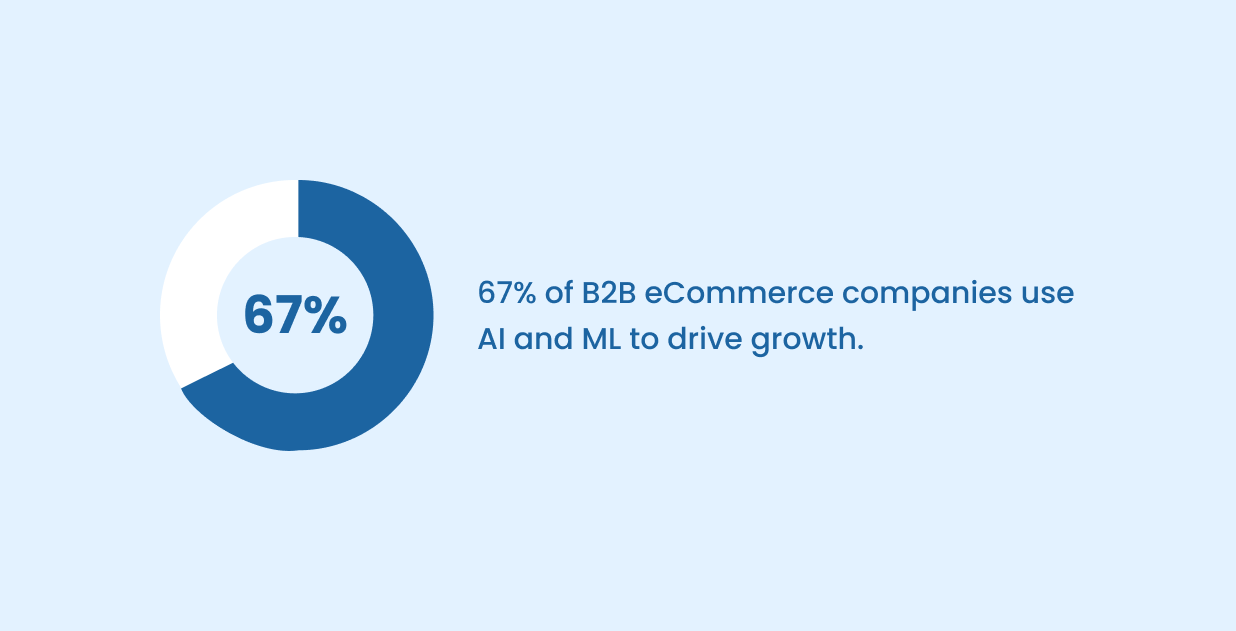
A survey indicates that 67% of B2B eCommerce companies use AI and ML to drive growth.
So, are you ready to embrace the power of ML and AI in business?
Let me share exclusive insights into how these technologies empower your business and pave the path to success.
The Rising Impact of AI and ML in B2B eCommerce
Artificial Intelligence (AI)
The global market size of AI is projected to grow at a CAGR of 35.9% by 2030.
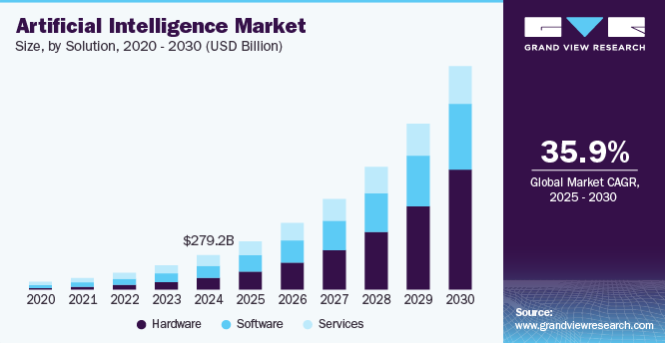
The expanding market indicates increasing usage of AI-powered solutions across industries to stay ahead of the competition.
- 41% of companies have fully integrated AI, but investment is expected to rise. AI spending will increase by 66% within the next two years.
- 25% of business-to-business (B2B) organizations in the United States fully included AI-based technologies in their eCommerce operations.
Companies use AI for pattern analysis. It provides accurate insights into customers’ buying behavior and preferences. The technology helps you understand the target audience and define effective eCommerce strategies to gain optimum benefits.
Developing custom-made Artificial Intelligence solutions, you can leverage
- Hyper-personalization
- Increased customer engagement
- Improved conversion ratio
- Better revenue
The most common AI use cases in B2B eCommerce are:
- Chatbot
- Visual Search
- Voice Commerce
- Fraud Detection
- Personalized Product Recommendations
- Price Optimization, and more
Machine Learning (ML)
Considering Machine Learning in B2B business, it becomes easy to meet customers’ expectations. The dynamic algorithm of ML collects data, analyzes it, and delivers accurate results related to buyers’ buying journeys, search records, preferences, and more.
Machine Learning helps companies improve product recommendations and facilitate buyers with the products they look for. Eventually, this increases revenue in the long term.
The technology analyzes customers’ buying patterns and understands their needs. It provides the most relevant results to the target audience to improve purchase decisions. Using ML in B2B, you can enhance customer satisfaction and win their trust.
The popular Machine Learning use cases are:
- Personalization
- Customer Support
- Predictive Maintenance
- Segmentations
- Churn Prediction, and more
How Will AI and ML Transform Your B2B Business in 2025?
AI and ML in B2B businesses can increase conversions. These technologies streamline the critical operations using advanced features and functionalities, enhancing efficiency and effectiveness. Here are a few key impacts of AI and ML integration.
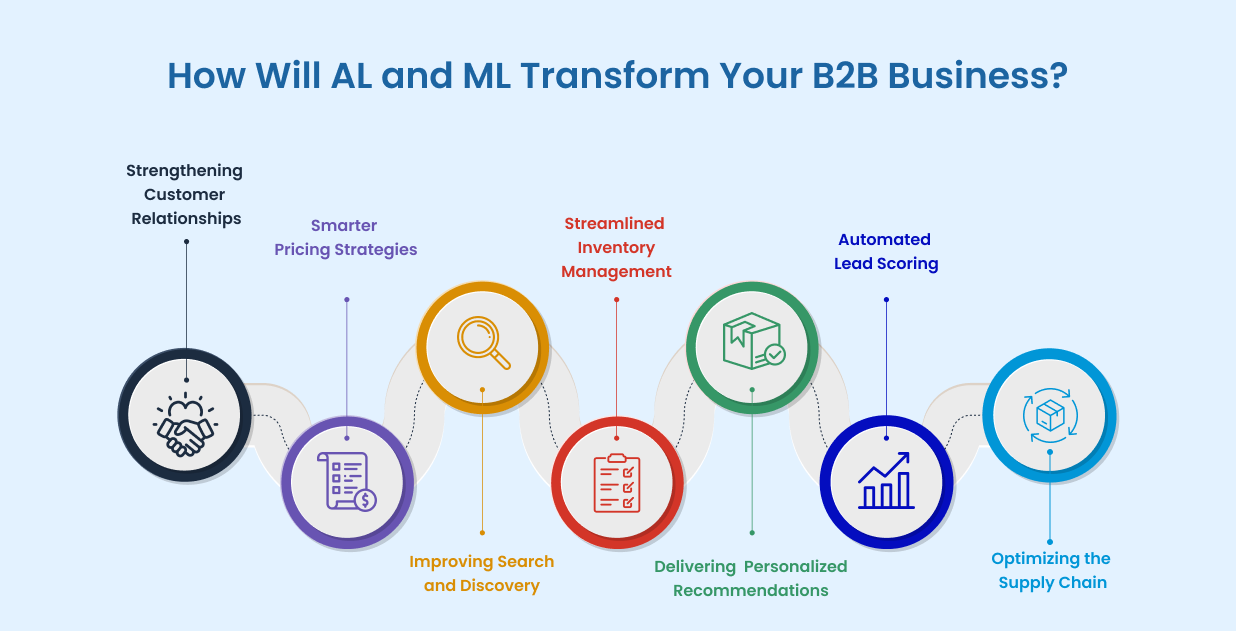
Strengthening Customer Relationships
B2B businesses involve a long-term commitment or a partnership. A healthy customer relationship is key to success for them.
AI and ML help you establish strong customer relationships by addressing their issues in real-time through chatbots.
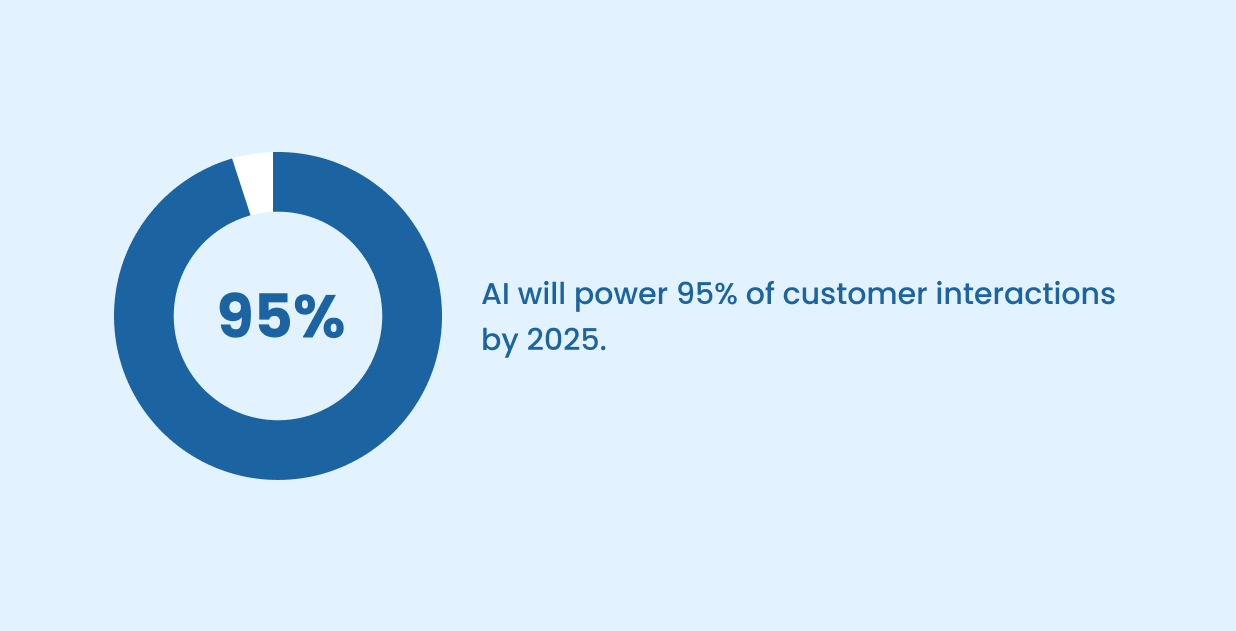
AI will power 95% of customer interactions by 2025, and 19 out of every 20 will be AI-assisted by 2025.
Smarter Pricing Strategies
B2B pricing is complex due to different factors such as bulk discounts, customer-specific agreements, different discount terms, etc. AI/ML optimizes your pricing strategy by analyzing competitors’ pricing, market trends, and customer demand.
Assessment of pricing data in real-time allows you to adjust pricing strategies to remain relevant and competitive. ML algorithms help brands predict and provide the best price based on their negotiation behavior and purchase history. Machine Learning enhances overall customer experiences.
Streamlined Inventory Management
For B2B eCommerce companies, inventory and supply chains are critical elements that drive success. Using ML and AI in business, you can streamline operations associated with inventory management, including automating repetitive tasks, predicting demands, and identifying inefficiencies.
Harnessing the potential of ML algorithms, you can analyze market trends, sales data, and external factors such as seasonal demand forecasts. Avoid overstocking and understocking by maintaining an optimum inventory level.
Automated Lead Scoring
In B2B domains, it is difficult to find quality leads. You need to connect with the right people and understand their needs to convert them into customers for the long term. With AI and ML integration, you can create tailored solutions that drive potential leads.
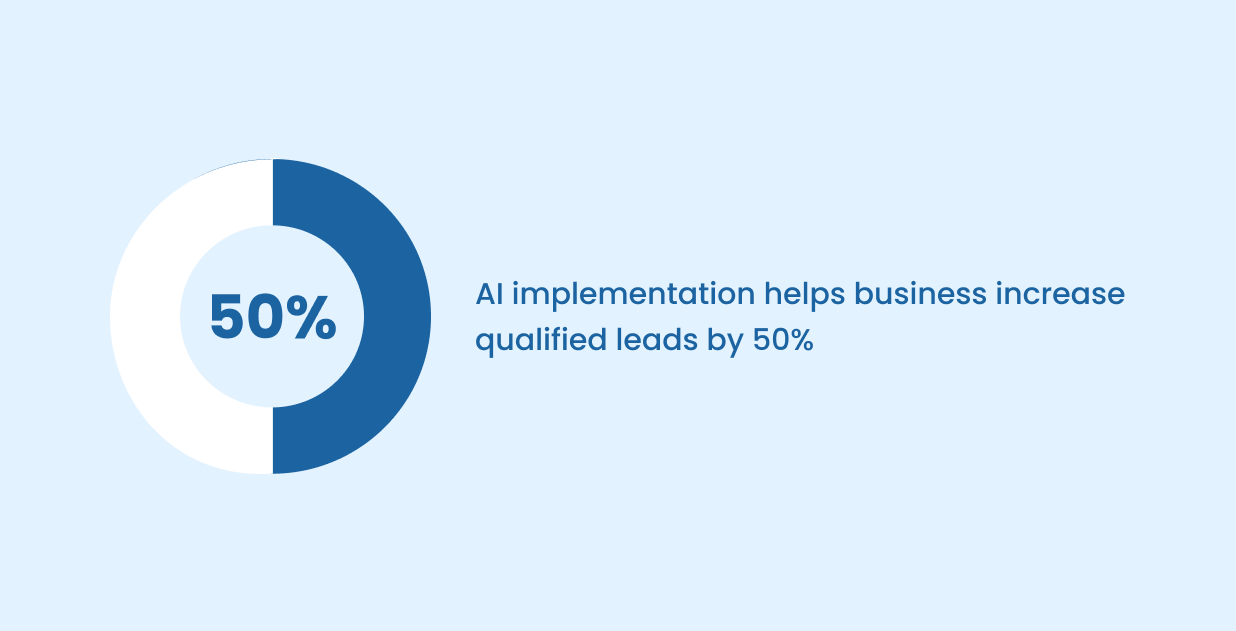
According to a survey, AI implementation helps businesses increase qualified leads by 50%.
The technologies automate data collection and analysis, save time, and help you connect with the right audience.
Moreover, ML algorithms analyze the leads based on historical data and predict potential value. Let your sales team prioritize leads, focus on potential customers, and improve the conversion ratio.
Improving Search and Discovery
It is difficult for B2B buyers to find the relevant products among your thousands of products.
AI-powered search provides faster product discovery using image recognition and Natural Language Processing (NLP) technologies. Artificial Intelligence solutions understand user queries and provide accurate product results.
Moreover, AI facilitates customers with visual search, where they can upload product images and find similar ones. By providing the right match, AI and ML integration improve customers’ buying journeys.
Delivering Personalized Recommendations
Personalization is the most impactful strategy for B2B companies to stay ahead of the curve. AI and ML allow for hyper-personalization by unleashing their potential.
Most B2B transactions consist of complex decision-making and high-value transactions. Providing exclusive insights, AI/ML empowers your personalization efforts.
AI-driven data analytics understand customers’ behavior, analyze purchase patterns, and identify preferences. The AI algorithms analyze a large amount of data rapidly and suggest the right products for the client’s needs.
ML offers predictive analytics that anticipate the B2B buyer’s behavior based on previous purchases or industry trends.
Implementation of AI and ML in businesses helps you win customers’ trust and loyalty.
Optimizing the Supply Chain
AI comes with advanced features that optimize your supply chain operations. It can predict demand, identify the most efficient delivery route, and manage inventory levels effectively. With AI and ML technologies, you can take advantage of timely product delivery and reduce operational costs.
Step-by-Step Guide to Implementing AI and ML in B2B eCommerce
For effective AI and ML integration, you need to follow the right processes that ensure the development of robust digital solutions. Let’s understand the process of deploying the cutting-edge B2B solution.
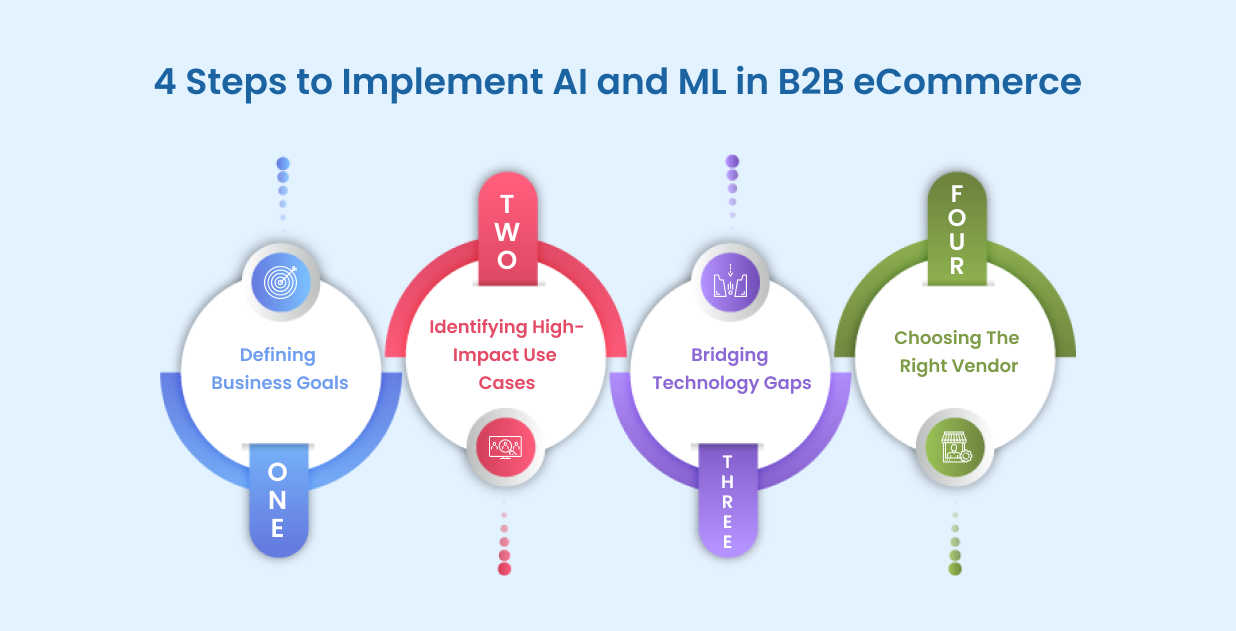
Step 1: Defining Business Goals
Don’t consider the larger AI and ML scope at the initial stage. It may lead to unnecessary expenses. To stay focused, prioritize the goals and start with the simple.
For example,
You can start by implementing AI and ML to predict and prevent the churn rate. If you get a satisfactory outcome, scale your AI and ML implementation.
Step 2: Identifying High-Impact Use Cases
Identify the business areas where AI and ML can be implemented. The most common areas where you can utilize the potential of modern technologies are customer service, marketing, inventory management, etc.
Step 3: Bridging Technology Gaps
Before implementing AI and ML in B2B eCommerce, understand the needs and gaps in the existing IT ecosystem. Analyze how AI and ML can fill that gap and drive better value to your existing digital operations.
Step 4: Choosing the Right Vendor (who performs the following tasks)
Selecting the Best Tools
While selecting AI and ML tools, ensure they align with your business needs and objectives. You can consider multiple platforms and frameworks, including AWS AI services, TensorFlow, PyTorch, and more.
Developing Robust Data Models
With the help of experienced data scientists, you can develop tailored ML models. Start with a pilot project to assess the output and impact. Test the models before pushing them live to ensure the solution’s success.
Integrating Data Models with Existing Systems
Integrate AI and ML with your existing eCommerce solutions and enterprise systems, such as ERP, CRM, and more. This will automate your operations and enhance productivity.
Testing
Once you implement all the new developments and ensure smooth integration, do not push them directly to live. Instead, rigorously test the performance of AI and ML models. If everything works smoothly, go ahead and push functionality live.
Monitoring and Optimizing
Monitor the performance of AI and ML systems constantly. Collect feedback and make the required adjustments to improve the efficiency and accuracy of the solution. Implement high-performance solutions that help you achieve operational excellence.
The Road Ahead: Harness AI and ML in B2B eCommerce Growth
AI and ML help B2B companies gain a competitive edge in today’s dynamic eCommerce space. The technologies help you pave the path to success by improving your processes through automation.
ioVista creates futuristic B2B eCommerce solutions by offering end-to-end AI/ML development services. We create customized algorithms and models to address your specific needs. By implementing AI and ML technologies, we help B2B brands automate their digital operations and deliver excellent customer experiences.
Do you want to transform your eCommerce ecosystem with AI and ML integration?
Feel free to contact our AI/ML experts today and leverage personalized consultation to understand your challenges/requirements and deliver the best-in-class solution.
Frequently Asked Questions
What is the Future of AI in eCommerce?
AI in eCommerce empowers various operations and drives immense value to your B2B business. By offering features like hyper-personalization, AI-powered search, virtual assistants, better inventory management, and more. AI transforms the B2B eCommerce space for businesses and ensures future success.
How can Machine Learning Improve eCommerce Sales?
Machine Learning improves personalization, enhances customer experience, and optimizes processes. It helps increase conversions and sales by providing personalized product recommendations, fraud detection, demand forecasting, and other capabilities.
What is the Concept of AI and Machine Learning in eCommerce?
AI and ML in eCommerce help you leverage data analysis to optimise operations, drive growth, and personalize experiences by automating tasks, understanding behavior, and predicting trends. Modern technologies facilitate companies with dynamic pricing, personalized product recommendations, improved customer services, and targeted marketing.
Mike Patel

Mike Patel is the Founder and CEO of ioVista, a leading digital commerce agency specializing in eCommerce solutions. With a strong background in business and technology, Mike Patel has been at the forefront of driving digital transformations for businesses. He has successfully navigated the ever-changing landscape of eCommerce, helping companies leverage the power of online platforms to grow their brand, increase revenues, and optimize their digital presence. Under his leadership, ioVista has become a trusted partner with major technology companies: Adobe/Magento, Google, BigCommerce, Shopify, and Yahoo. He is dedicated to staying ahead of industry trends, adopting cutting-edge technologies, and continuously improving strategies to provide clients with a competitive edge. Mike’s commitment to excellence and client satisfaction is evident in every project ioVista undertakes.
Popular Posts
-
 AI and ML, B2B, Digital Marketing, E-Commerce, Web Development
Adobe Commerce Security Update APSB25-50: Key Highlights
Mike Patel
11 Jun 2025 -
 AI and ML, B2B, Digital Marketing, E-Commerce, Web Development
B2B Excellence Starts with Adobe Commerce (Magento) - Not WooCommerce
Mike Patel
03 Jun 2025 -
 AI and ML, B2B, Digital Marketing, E-Commerce, Web Development
AI and ML in B2B: A Vision for the Future of Commerce by 2025
Mike Patel
27 May 2025 -
 AI and ML, B2B, Digital Marketing, E-Commerce, Web Development
20 Next-Gen B2B eCommerce Features that will Dominate in 2025
Mike Patel
20 May 2025 -
 AI and ML, B2B, Digital Marketing, E-Commerce, Web Development
WooCommerce to BigCommerce Migration Fuels Your B2B eCommerce Growth
Mike Patel
06 May 2025 -
 AI and ML, B2B, Digital Marketing, E-Commerce, Web Development
Adobe Commerce SaaS: How Will It Empower Your eCommerce Business?
Mike Patel
22 Apr 2025 -
 AI and ML, B2B, Digital Marketing, E-Commerce, Web Development
Leverage ERP Integration to Scale Your B2B eCommerce Business in 2025
Mike Patel
15 Apr 2025 -
 AI and ML, B2B, Digital Marketing, E-Commerce, Web Development
Adobe Commerce Security Update APSB25-26: All You Need to Know
Mike Patel
10 Apr 2025 -
 AI and ML, B2B, Digital Marketing, E-Commerce, Web Development
Adobe Commerce 2.4.8 Release: Key Highlights
Mike Patel
10 Apr 2025 -
 AI and ML, B2B, Digital Marketing, E-Commerce, Web Development
Why Scaling Business Should Migrate WooCommerce Stores to Shopify
Mike Patel
08 Apr 2025 -
 AI and ML, B2B, Digital Marketing, E-Commerce, Web Development
Why Does Adobe Commerce (Magento) Lead the Way of B2B eCommerce
Mike Patel
18 Mar 2025 -
 AI and ML, B2B, Digital Marketing, E-Commerce, Web Development
10 Key Drivers of Digital Transformation in B2B eCommerce for 2025
Mike Patel
04 Mar 2025 -
 AI and ML, B2B, Digital Marketing, E-Commerce, Web Development
5 Leading eCommerce Platforms to Build Scalable B2B Customer Portals
Mike Patel
25 Feb 2025 -
 AI and ML, B2B, Digital Marketing, E-Commerce, Web Development
Google Search Ranking Volatility: All You Need to Know
Mike Patel
18 Feb 2025 -
 AI and ML, B2B, Digital Marketing, E-Commerce, Web Development
Adobe Commerce Security Update APSB25-08: All You Need to Know
Mike Patel
13 Feb 2025 -
 AI and ML, B2B, Digital Marketing, E-Commerce, Web Development
7 Strategic Benefits of an Online B2B Customer Portal
Mike Patel
11 Feb 2025 -
 AI and ML, B2B, Digital Marketing, E-Commerce, Web Development
What Makes a Great Online B2B Customer Portal? Top 10 Features to Know
Mike Patel
04 Feb 2025 -
 AI and ML, B2B, Digital Marketing, E-Commerce, Web Development
Legacy B2B eCommerce Systems Slowing You Down? It's Time for Modernization
Mike Patel
28 Jan 2025 -
 AI and ML, B2B, Digital Marketing, E-Commerce, Web Development
Essential B2B Commerce Features for 2024
Mike Patel
20 Nov 2024 -
 AI and ML, B2B, Digital Marketing, E-Commerce, Web Development
Security Update Available for Adobe Commerce | APSB24-90
Mike Patel
20 Nov 2024 -
 AI and ML, B2B, Digital Marketing, E-Commerce, Web Development
Why Choose Hyvä Enterprise for Your Adobe Commerce Store?
Mike Patel
19 Nov 2024 -
 AI and ML, B2B, Digital Marketing, E-Commerce, Web Development
Security Update APSB24-73 for Adobe Commerce: Everything You Need to Know
Mike Patel
14 Oct 2024 -
 AI and ML, B2B, Digital Marketing, E-Commerce, Web Development
CosmicSting Exploit Still Poses a Threat
Mike Patel
25 Jul 2024 -
 AI and ML, B2B, Digital Marketing, E-Commerce, Web Development
CosmicSting: Unauthorized XXE Vulnerability
Mike Patel
17 Jul 2024 -
 AI and ML, B2B, Digital Marketing, E-Commerce, Web Development
Magento 2.4.7: Explore the Newest Enhancements and Features
Mike Patel
30 Apr 2024 -
 AI and ML, B2B, Digital Marketing, E-Commerce, Web Development
Magento 2.4.6-p5: Enhancing Stability and Security
Mike Patel
22 Apr 2024 -
 AI and ML, B2B, Digital Marketing, E-Commerce, Web Development
Everything You Need To Know About eCommerce SEO in 2024
Mike Patel
16 Apr 2024 -
 AI and ML, B2B, Digital Marketing, E-Commerce, Web Development
The Impact of Site Speed on eCommerce SEO Performance
Mike Patel
14 Feb 2024 -
 AI and ML, B2B, Digital Marketing, E-Commerce, Web Development
ioVista Attains B2B Specialization on BigCommerce
Mike Patel
30 Oct 2023 -
 AI and ML, B2B, Digital Marketing, E-Commerce, Web Development
5 Ways to Boost eCommerce Sales in 2024
Mike Patel
21 Sep 2023 -
 AI and ML, B2B, Digital Marketing, E-Commerce, Web Development
It’s Official: ioVista Has Become a Recognized Adobe Specialized Partner
Mike Patel
05 Sep 2023 -
 AI and ML, B2B, Digital Marketing, E-Commerce, Web Development
Magento 2.4.7-beta1 Release
Mike Patel
15 Aug 2023 -
 AI and ML, B2B, Digital Marketing, E-Commerce, Web Development
Why Are You Still Using Yahoo Stores in 2023?
Mike Patel
05 Jul 2023 -
 AI and ML, B2B, Digital Marketing, E-Commerce, Web Development
ioVista Announced as a 2023 Local Excellence Award Winner by UpCity
Mike Patel
09 May 2023 -
 AI and ML, B2B, Digital Marketing, E-Commerce, Web Development
Google Analytics 4: What You Need To Know
Mike Patel
29 Mar 2023 -
 AI and ML, B2B, Digital Marketing, E-Commerce, Web Development
Adobe Commerce 2.4.6 Release
Mike Patel
13 Mar 2023 -
 AI and ML, B2B, Digital Marketing, E-Commerce, Web Development
Questions You Should Ask Your Magento Agency
Mike Patel
17 Feb 2023 -
 AI and ML, B2B, Digital Marketing, E-Commerce, Web Development
7 Proven Strategies to Increase B2B/Wholesale eCommerce Revenue
Mike Patel
01 Feb 2023 -
 AI and ML, B2B, Digital Marketing, E-Commerce, Web Development
10 eCommerce Trends to Increase your Sales in 2023
Mike Patel
12 Jan 2023 -
 AI and ML, B2B, Digital Marketing, E-Commerce, Web Development
B2B eCommerce Features Your Store Need in 2023
Mike Patel
05 Jan 2023 -
 AI and ML, B2B, Digital Marketing, E-Commerce, Web Development
Adobe/Magento Highlights 2022 - Is your store Up-to-Date
Mike Patel
20 Dec 2022 -
 AI and ML, B2B, Digital Marketing, E-Commerce, Web Development
Adobe discontinues Support for the 2.4.0-2.4.3 Release Line
Mike Patel
09 Dec 2022 -
 AI and ML, B2B, Digital Marketing, E-Commerce, Web Development
BFCM Round-Up – Get Your Store Ready for Christmas 2022!
Mike Patel
07 Dec 2022 -
 AI and ML, B2B, Digital Marketing, E-Commerce, Web Development
Universal Analytics Going Away: What Does it Mean, What you need to Do?
Mike Patel
24 Nov 2022 -
 AI and ML, B2B, Digital Marketing, E-Commerce, Web Development
40% of Magento and Adobe Commerce Websites at Risk in November 2022
Mike Patel
17 Nov 2022 -
 AI and ML, B2B, Digital Marketing, E-Commerce, Web Development
ioVista Awarded the Best B2B Company 2022
Mike Patel
04 Nov 2022 -
 AI and ML, B2B, Digital Marketing, E-Commerce, Web Development
Adobe Releases Critical Security Patches for Magento 2.4.5 and 2.4.4
Mike Patel
27 Oct 2022 -
 AI and ML, B2B, Digital Marketing, E-Commerce, Web Development
Holiday Season Best Practices for eCommerce
Mike Patel
20 Oct 2022 -
 AI and ML, B2B, Digital Marketing, E-Commerce, Web Development
ioVista is Sponsoring the Largest eCommerce Event in Dallas
Mike Patel
07 Oct 2022 -
 AI and ML, B2B, Digital Marketing, E-Commerce, Web Development
Magento 2 Vulnerability: Surge in Hacking on Unpatched Stores
Mike Patel
27 Sep 2022 -
 AI and ML, B2B, Digital Marketing, E-Commerce, Web Development
Get your Holiday eCommerce Marketing Started with These 5 Tips
Mike Patel
15 Sep 2022 -
 AI and ML, B2B, Digital Marketing, E-Commerce, Web Development
Why a Magento Code Audit is Essential for your eCommerce Store
Mike Patel
10 Sep 2022 -
 AI and ML, B2B, Digital Marketing, E-Commerce, Web Development
Launching a Successful eCommerce Store
Mike Patel
30 Aug 2022 -
 AI and ML, B2B, Digital Marketing, E-Commerce, Web Development
Choosing the Right eCommerce Platform for B2B
Mike Patel
25 Aug 2022 -
 AI and ML, B2B, Digital Marketing, E-Commerce, Web Development
The Challenges of eCommerce in Manufacturing and how to Overcome them
Mike Patel
17 Aug 2022 -
 AI and ML, B2B, Digital Marketing, E-Commerce, Web Development
Adobe Releases Magento Open Source and Adobe Commerce 2.4.5
Mike Patel
10 Aug 2022 -
 AI and ML, B2B, Digital Marketing, E-Commerce, Web Development
How Manufacturers can Switch to eCommerce
Mike Patel
02 Aug 2022 -
 AI and ML, B2B, Digital Marketing, E-Commerce, Web Development
Benefits of eCommerce for Manufacturing
Mike Patel
25 Jul 2022 -
 AI and ML, B2B, Digital Marketing, E-Commerce, Web Development
Magento 2.3.x End-of-Life in September 2022
Mike Patel
19 Jul 2022 -
 AI and ML, B2B, Digital Marketing, E-Commerce, Web Development
The Growth of eCommerce and its impact on the Manufacturing Industry
Mike Patel
01 Jul 2022 -
 AI and ML, B2B, Digital Marketing, E-Commerce, Web Development
The Future of Manufacturing Business is Digital
Mike Patel
24 Jun 2022 -
 AI and ML, B2B, Digital Marketing, E-Commerce, Web Development
Magento Open Source Vs Commerce Vs Cloud: How to Pick your Edition
Mike Patel
14 Jun 2022 -
 AI and ML, B2B, Digital Marketing, E-Commerce, Web Development
Is your Store Optimized? How do you Measure eCommerce Conversion Rates?
Mike Patel
11 May 2022 -
 AI and ML, B2B, Digital Marketing, E-Commerce, Web Development
ioVista Recognized for B2B Services: Excellence Award Winner 2022
Mike Patel
03 May 2022 -
 AI and ML, B2B, Digital Marketing, E-Commerce, Web Development
How to Optimize Your eCommerce Store for Conversions
Mike Patel
29 Apr 2022 -
 AI and ML, B2B, Digital Marketing, E-Commerce, Web Development
Future Proof your Digital Commerce with Headless Commerce
Mike Patel
21 Apr 2022 -
 AI and ML, B2B, Digital Marketing, E-Commerce, Web Development
Adobe Commerce 2.4.4 Release: Faster, Better, More Scalable
Mike Patel
13 Apr 2022 -
 AI and ML, B2B, Digital Marketing, E-Commerce, Web Development
Is Your Business Ready for Digital Transformation? The Key Steps!
Mike Patel
01 Mar 2022 -
 AI and ML, B2B, Digital Marketing, E-Commerce, Web Development
CVE-2022-24086 What is it?
Mike Patel
16 Feb 2022 -
 AI and ML, B2B, Digital Marketing, E-Commerce, Web Development
February 2022, over 500 Legacy Magento 1 Websites Hacked!
Mike Patel
15 Feb 2022 -
 AI and ML, B2B, Digital Marketing, E-Commerce, Web Development
Adobe released a new End of Support Date for Magento 2.3.x
Mike Patel
04 Feb 2022 -
 AI and ML, B2B, Digital Marketing, E-Commerce, Web Development
The How & Why: Successful Data-Driven Marketing for eCommerce Stores
Mike Patel
13 Jan 2022 -
 AI and ML, B2B, Digital Marketing, E-Commerce, Web Development
How to Find Right Audience for your Online Business
Mike Patel
10 Jan 2022 -
 AI and ML, B2B, Digital Marketing, E-Commerce, Web Development
5 Key Reasons to Enable Social Commerce Channels for your Store
Mike Patel
17 Dec 2021 -
 AI and ML, B2B, Digital Marketing, E-Commerce, Web Development
ioVista is honored to be one of the Top 1000 Companies 2021
Mike Patel
13 Dec 2021 -
 AI and ML, B2B, Digital Marketing, E-Commerce, Web Development
Are Your FB, Instagram, Pinterest Accounts Geared for Social Shopping?
Mike Patel
30 Nov 2021 -
 AI and ML, B2B, Digital Marketing, E-Commerce, Web Development
Five BFCM Strategies Merchants Love To Implement For Holidays
Mike Patel
26 Oct 2021 -
 AI and ML, B2B, Digital Marketing, E-Commerce, Web Development
How to Meet Holiday Shoppers’ Needs With an Omnichannel Approach
Mike Patel
20 Oct 2021 -
 AI and ML, B2B, Digital Marketing, E-Commerce, Web Development
Support for Magento Commerce 2.3 and Magento Open Source 2.3 Ends
Mike Patel
05 Oct 2021 -
 AI and ML, B2B, Digital Marketing, E-Commerce, Web Development
Why your Business Needs Marketing Automation this Holiday Season
Mike Patel
30 Sep 2021 -
 AI and ML, B2B, Digital Marketing, E-Commerce, Web Development
How Augmented Reality can Deliver more Engaging Shopping Experiences
Mike Patel
21 Sep 2021 -
 AI and ML, B2B, Digital Marketing, E-Commerce, Web Development
These 5 Local Business Marketing Strategies Will Transform Your Business
Mike Patel
17 Sep 2021 -
 AI and ML, B2B, Digital Marketing, E-Commerce, Web Development
How eCommerce can be the Game Changer for Warehouses
Mike Patel
08 Sep 2021 -
 AI and ML, B2B, Digital Marketing, E-Commerce, Web Development
Magento 2.4.3 has arrived! Everything you Need to Know
Mike Patel
11 Aug 2021 -
 AI and ML, B2B, Digital Marketing, E-Commerce, Web Development
ioVista named 2021 Top B2B Company in Dallas and Texas
Mike Patel
05 Aug 2021 -
 AI and ML, B2B, Digital Marketing, E-Commerce, Web Development
Why Every Business Should Be on eCommerce
Mike Patel
29 Jul 2021








Let’s work together to create outstanding digital experiences.
With 20+ years of industry experience, ioVista understands your eCommerce needs and delivers best-in-class solutions that help you gain a competitive edge.
or Call us at: +1 214-699-4391

TOP
Get in Touch