


6 Easy Steps To Optimize Your E-commerce Store Product Pages
05 Dec 2019
 Mike Patel

Customers are much more likely to purchase something from a neat, organized store that’s easy to browse through than from a store that’s a complete mess.
Think of your on-page product descriptions as the hypothetical “aisles” of your store. You want your e-commerce site to be enjoyable for your customers, and to give them an enjoyable, easy shopping experience.
Why it is significant to optimize your product pages?
SEO is the biggest reason to optimize your on-page product descriptions.
Some e-commerce stores don’t create original information, and will simply duplicate information found on other sites when selling a certain item. This means that tons of pages with the same image and description exist out there online – and they could be totally killing your conversion rate.
If your store has nothing to set it apart from the rest, then that will be reflected in your search rankings. Your e-commerce store won’t be living up to its potential. And, to top it off, Google and other search engines can penalize you for copying their content. So, it’s definitely something you want to avoid.
Sure, optimizing your on-page product descriptions will take time, but it’s truly worth it. Your customers will enjoy browsing your store, you won’t be penalized, and you will maximize your conversion rate.
Here are 6 easy steps that you can take to optimize your product pages.
1) Begin by keeping product name and URLs original
No matter what you sell, your products need names. When describing your items on your e-commerce store, you should keep it short, while still making sure that you are telling your customers what they should know.
For example, if you’re selling size 8 leather Steve Madden boots, then your product name could simply be, “Steve Madden leather boots, size 8.” Keep it simple, but still descriptive.
Also, the URL that goes along with your product should have the title in it as well. For example, the URL for the boots should be www.yourstore.com/leather-steve-madden-boots.
You should use this format for every single product that you sell in your store. This will make it easy for your customers to find what they are looking for, and it will show that you took the time to make your store organized.
2) Include meta titles and descriptions
Now, you’ll want to optimize your products for SEO.
Creating meta titles and descriptions for your products will help you customers find what they are looking for when they search on Google and other search engines.
A meta description is just a short description of a product that appears below the meta title on search engines. It doesn’t take long to create, but it will make a huge difference in your e-commerce store.
Here’s how you can change meta titles and product descriptions in Magento:
- Log into your store
- Go to Catalog, and then click on Products
- Choose the product you want to edit
- Click search engine optimization
Now, you can fill in the boxes accordingly. Most meta titles are around 55 characters in length, and should be no more than 71 characters.
3) Create your own product descriptions
Sure, this is a time consuming feat, but it’s so worth it. As the owner of your store, you know the most about it, and you know about your products. You’re the best person to write your product descriptions because you’re the most knowledgeable.
You have the opportunity to sell a product effectively with a great product description. By incorporating SEO keywords into descriptions, you will boost your page rankings on search engines.
Here’s the recipe for basic product descriptions:
- A general description of the product
- Any specifications
- Features
- Warranties (if there are any)
Remember not to plagiarize and use another description that you found somewhere else. If you see a description that you like posted on another e-commerce store, figure out a way that you can re-write it.
4) Use optimized images
Poor image quality can really slow down your website. Whether you’ve taken your own photos or are using ones from a manufacturer, you have to optimize them. Here’s how:
- Convert all images to .JPEG to reduce their file size
- Edit extremely large images
- Make sure that thumbnails are as small as possible
If you don’t have time to optimize your images, don’t worry. You can download extensions that can take care of this automatically.
5) Use alt text
After optimizing your images to improve loading times, you should make sure that each image has alt text.
Alt text tells search engines about an image. Google cannot interpret images on its own, so it needs alt text to understand them. Alt text is also essential for people with vision impairments who are screen readers.
Alt text is meant to be descriptive, not wordy. For example, good alt text for those leather boots would be “Woman wearing leather Steve Madden boots”, not “best leather boots to wear when it’s cold outside.” Don’t use filler words to describe something. Make sure the lat text is short and to the point.
6) Enable product reviews
Studies have shown that 95 percent of customers read reviews to decide whether or not to make a purchase.
Studies have also shown that posting online reviews can increase conversion rates up to 270 percent. That’s insane. You need to have online reviews.
Here’s how you can enable product reviews on Magento:
- Go to “store” in the admin sidebar
- Go to settings
- Click on configuration
- Click on catalog on the left panel
- Go to the product reviews section and change “allow guests to write reviews” from yes to no
Now, your customers can post reviews!
Follow these tips!
These tips can significantly improve your e-commerce store. You will boost sales and SEO, and you’ll gain new customers. These few steps are easy, but are very effective.
Mike Patel

Mike Patel is the Founder and CEO of ioVista, a leading digital commerce agency specializing in eCommerce solutions. With a strong background in business and technology, Mike Patel has been at the forefront of driving digital transformations for businesses. He has successfully navigated the ever-changing landscape of eCommerce, helping companies leverage the power of online platforms to grow their brand, increase revenues, and optimize their digital presence. Under his leadership, ioVista has become a trusted partner with major technology companies: Adobe/Magento, Google, BigCommerce, Shopify, and Yahoo. He is dedicated to staying ahead of industry trends, adopting cutting-edge technologies, and continuously improving strategies to provide clients with a competitive edge. Mike’s commitment to excellence and client satisfaction is evident in every project ioVista undertakes.
Popular Posts
-

-
 E-Commerce
B2B Excellence Starts with Adobe Commerce (Magento) - Not WooCommerce
Mike Patel
03 Jun 2025 -

-

-
 E-Commerce
WooCommerce to BigCommerce Migration Fuels Your B2B eCommerce Growth
Mike Patel
06 May 2025 -

-
 E-Commerce
Leverage ERP Integration to Scale Your B2B eCommerce Business in 2025
Mike Patel
15 Apr 2025 -

-

-
-
-
 E-Commerce
10 Key Drivers of Digital Transformation in B2B eCommerce for 2025
Mike Patel
04 Mar 2025 -
 E-Commerce
5 Leading eCommerce Platforms to Build Scalable B2B Customer Portals
Mike Patel
25 Feb 2025 -
-
-

-
 E-Commerce
What Makes a Great Online B2B Customer Portal? Top 10 Features to Know
Mike Patel
04 Feb 2025 -
 E-Commerce
Legacy B2B eCommerce Systems Slowing You Down? It's Time for Modernization
Mike Patel
28 Jan 2025 -
-

-
-
 E-Commerce
Security Update APSB24-73 for Adobe Commerce: Everything You Need to Know
Mike Patel
14 Oct 2024 -
-

-
 E-Commerce
Hyvä Theme for Magento 2: Uncover Powerful Features – Evaluate Pros and Cons
Mike Patel
16 Jul 2024 -
-

-
-

-

-
-
 E-Commerce
It’s Official: ioVista Has Become a Recognized Adobe Specialized Partner
Mike Patel
05 Sep 2023 -
-
-
 E-Commerce
ioVista Announced as a 2023 Local Excellence Award Winner by UpCity
Mike Patel
09 May 2023 -
-
-

-

-

-

-

-
 E-Commerce
BigCommerce Releases StagingPro for Enterprise Merchants and Agency Developers
Mike Patel
15 Dec 2022 -

-

-
 E-Commerce
Universal Analytics Going Away: What Does it Mean, What you need to Do?
Mike Patel
24 Nov 2022 -
 E-Commerce
40% of Magento and Adobe Commerce Websites at Risk in November 2022
Mike Patel
17 Nov 2022 -
 E-Commerce
Website Support: How Can ioVista Help keep your Store Up and Running During Holidays
Mike Patel
17 Nov 2022 -

-
 E-Commerce
Adobe Releases Critical Security Patches for Magento 2.4.5 and 2.4.4
Mike Patel
27 Oct 2022 -

-

-
-

-

-

-

-
 E-Commerce
How BigCommerce makes it easy for Legacy Businesses to get started with B2B eCommerce
Mike Patel
23 Aug 2022 -
 E-Commerce
The Challenges of eCommerce in Manufacturing and how to Overcome them
Mike Patel
17 Aug 2022 -
-
-
-
-
 E-Commerce
The Growth of eCommerce and its impact on the Manufacturing Industry
Mike Patel
01 Jul 2022 -

-
 E-Commerce
Magento Open Source Vs Commerce Vs Cloud: How to Pick your Edition
Mike Patel
14 Jun 2022 -
 E-Commerce
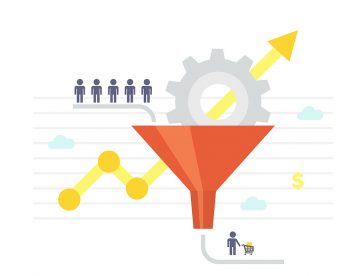
Is your Store Optimized? How do you Measure eCommerce Conversion Rates?
Mike Patel
11 May 2022 -

-

-
 E-Commerce
BigCommerce Strengthens Its Hold in B2B eCommerce Landscape: Acquires Bundle B2B
Mike Patel
27 Apr 2022 -

-
-
 E-Commerce
BigCommerce Releases Multi-Storefront: Multiple Brand Management within a Single Store
Mike Patel
01 Apr 2022 -
 E-Commerce
Adobe Commerce and Magento 1 Sites at Risk: Magento Vulnerabilities Exploited
Mike Patel
29 Mar 2022 -

-
 E-Commerce
ioVista named as Dallas’ most Recommended and Reviewed Digital Strategy Companies 2022
Mike Patel
24 Feb 2022 -

-

-
 E-Commerce
Progressive Web App: A well-established Approach to Architecting a Modern Website
Mike Patel
11 Feb 2022 -
-
 E-Commerce
How to Improve Internal Site Search for Better Mobile Conversions: 7 Proven Strategies
Mike Patel
27 Jan 2022 -
 E-Commerce
The How & Why: Successful Data-Driven Marketing for eCommerce Stores
Mike Patel
13 Jan 2022 -

-

-

-
 E-Commerce
Are Your FB, Instagram, Pinterest Accounts Geared for Social Shopping?
Mike Patel
30 Nov 2021 -

-

-
-

-
 E-Commerce
How Augmented Reality can Deliver more Engaging Shopping Experiences
Mike Patel
21 Sep 2021 -
 E-Commerce
These 5 Local Business Marketing Strategies Will Transform Your Business
Mike Patel
17 Sep 2021 -

-
-

-



Let’s work together to create outstanding digital experiences.
With 20+ years of industry experience, ioVista understands your eCommerce needs and delivers best-in-class solutions that help you gain a competitive edge.
or Call us at: +1 214-699-4391

TOP
Get in Touch