


10 Key Drivers of Digital Transformation in B2B eCommerce for 2025
04 Mar 2025
 Mike Patel
Over time, the digital space has evolved a lot for buyers and sellers. Considering digital transformation in B2B eCommerce business, companies leverage increased user engagement and operations excellence.
Offline buying will soon be out of trend as corporate clients have started preferring online platforms for B2B shopping. 7 out of 10 B2B buyers feel online shopping is more convenient and flexible than offline shopping.
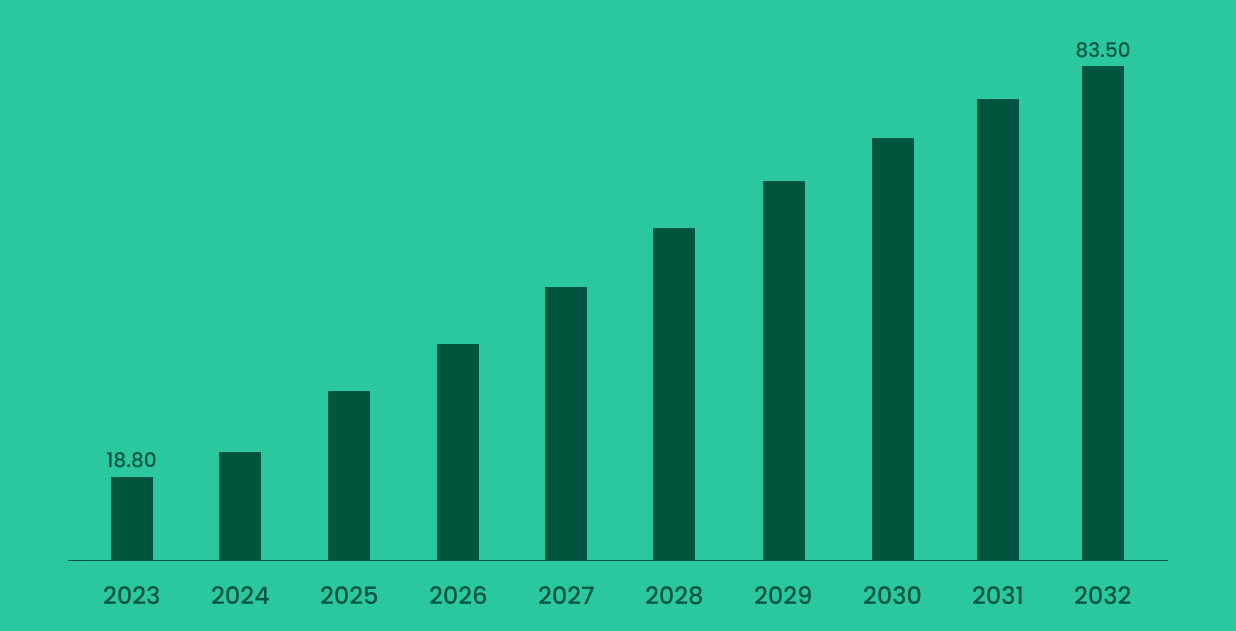
The B2B eCommerce industry is experiencing significant progression due to technological advancements, dynamic market conditions, and changes in B2B customers’ buying behavior. As a result, the global B2B eCommerce market is projected to reach $83.5 trillion by 2032.
The mindset of B2B customers has also changed drastically. 75% of B2B buyers prefer a rep-free sales experience and expect self-service digital purchases.
The above stat depicts that the B2B eCommerce space has become more dynamic and competitive. To stay ahead of the curve, consider the key drivers that empower your digital transformation journey.
In this post, you will understand essential drivers and how they contribute to your eCommerce success.
Brace yourself!
Top 10 Drivers that Ensure Digital Transformation in B2B eCommerce Business
Digital space expands immensely with each passing day. Differentiating your business from competitors becomes challenging. We will introduce critical aspects that help you deliver outstanding customer experiences and improve operational efficiency.
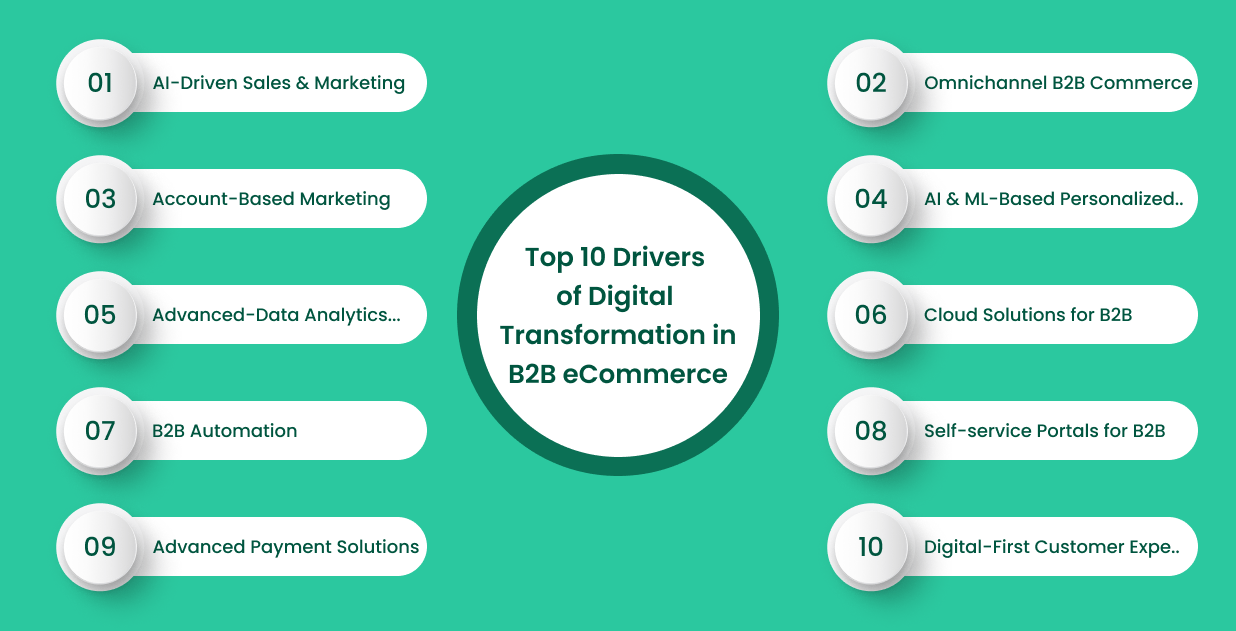
1. AI-Driven Sales & Marketing
Unleashing AI’s potential, you can establish effective sales and marketing processes by gathering customer data and extracting insights from it. With the help of AI-powered chatbots, you can improve client engagement and move them ahead in the sales and marketing funnel.
2. Omnichannel B2B Commerce
Unlike B2C customers. B2B buyers also perform detailed research to make a purchase decision. They check the products on your eCommerce portal, social media, mobile app, website, marketplaces, and in-store. They also look for consultation for better guidance.
Deliver a unified customer experience by establishing a consistent presence across all online and offline platforms. The cohesive experience improves customer experience significantly.
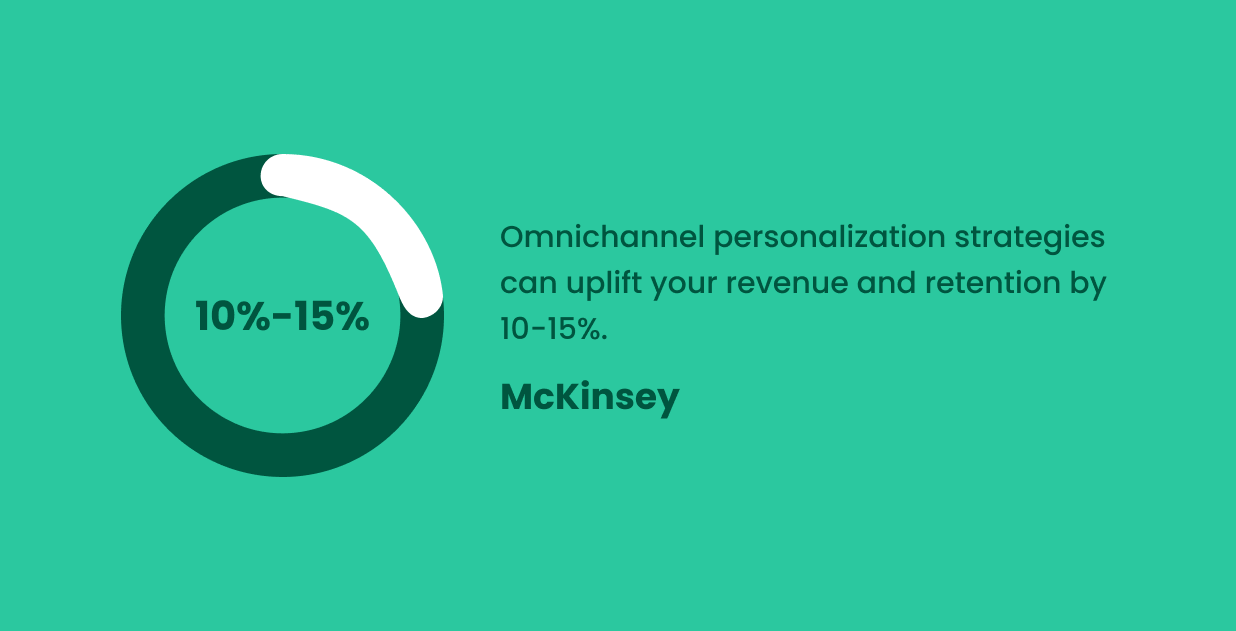
According to McKinsey research, omnichannel personalization strategies can uplift your revenue and retention by 10-15%.
3. Account-Based Marketing
Account-based marketing (ABM) is an essential strategy for B2B organizations. Your sales and marketing teams work together to identify and convert potential client accounts through a focused approach.
4. AI & ML-Based Personalized Experiences
Personalization is key to paving the path to success. Technologies like Artificial Intelligence (AI) and Machine Learning (ML) help B2B companies create intuitive buying journeys for corporate clients. These cutting-edge technologies contain varied personalization capabilities, including:
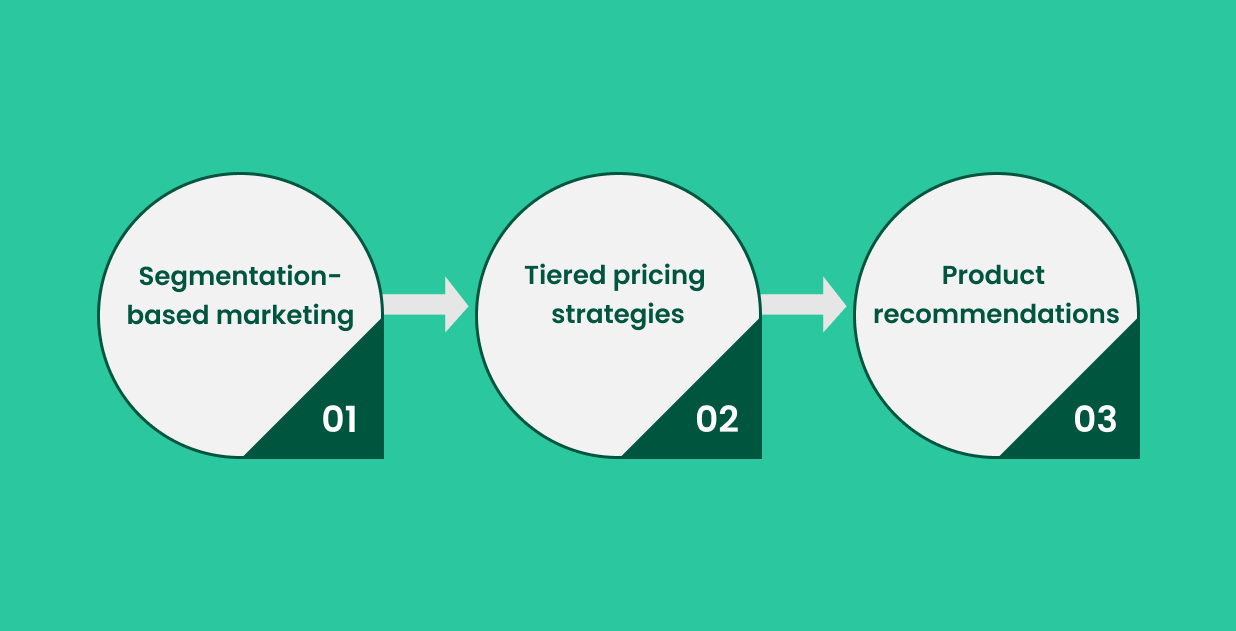
Segmentation-Based Marketing
Run the email campaigns by considering the client’s needs and preferences. Create highly targeted content for each segment to boost customer engagement and establish a strong connection with them.
Tiered Pricing Strategies
Tiered pricing allows B2B companies to quote different prices for a single type of product or versatile products based on the quantity purchased. The more a customer buys, the lower the rate per unit.
Product Recommendations
Leverage the potential of powerful AI tools that analyze clients’ buying behavior and recommend appropriate products. Such tools ensure customers find what they need. It fastens the buying process for your target audience.
5. Advanced Data Analytics for Decisions
Modern eCommerce companies heavily rely on data and analytics to make effective business decisions. Using the latest data analytics tools, you can get insights into the various aspects, including:
- Customers Buying Patterns
- Customer Behavior
- Sales Pattern
- Inventory Management
- High-Demand Products and more
When you have numbers, it is easier to define smart strategies, attract the target audience, and optimize internal operations. Data-driven decisions minimize risk and improve profitability.
6. Cloud Solutions for B2B
Cloud, an open-source technology, has already started disrupting the B2B domain by improvising varied digital processes.
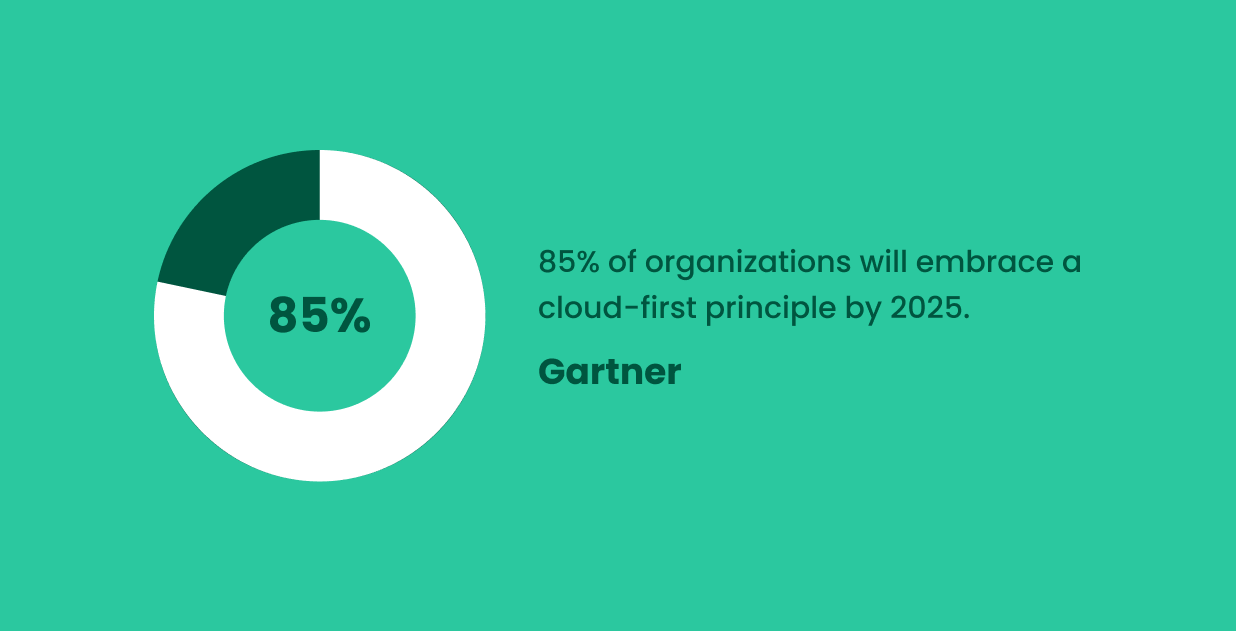
Gartner analysts predicted that more than 85% of organizations will embrace a cloud-first principle by 2025. The numbers show that more businesses are willing to consider cloud solutions to empower their B2B eCommerce business.
Integrate your enterprise system and 3rd-party applications with the cloud solutions to leverage next-level scalability, flexibility, and cost-efficiency. Integrating Cloud solutions with systems like ERP, CRM, supply chain, etc., drives several benefits to your business.
Apart from integration, there are multiple reasons why businesses are looking forward to considering Cloud solutions for B2B eCommerce success, which involve:
- Effective Collaboration
- Real-Time Access to Data
- Improved Security
- Greater Agility
- Multi-Brand Management from a Single Platform
- Enhanced Operational Efficiency
- Boosted Scalability
7. B2B Automation
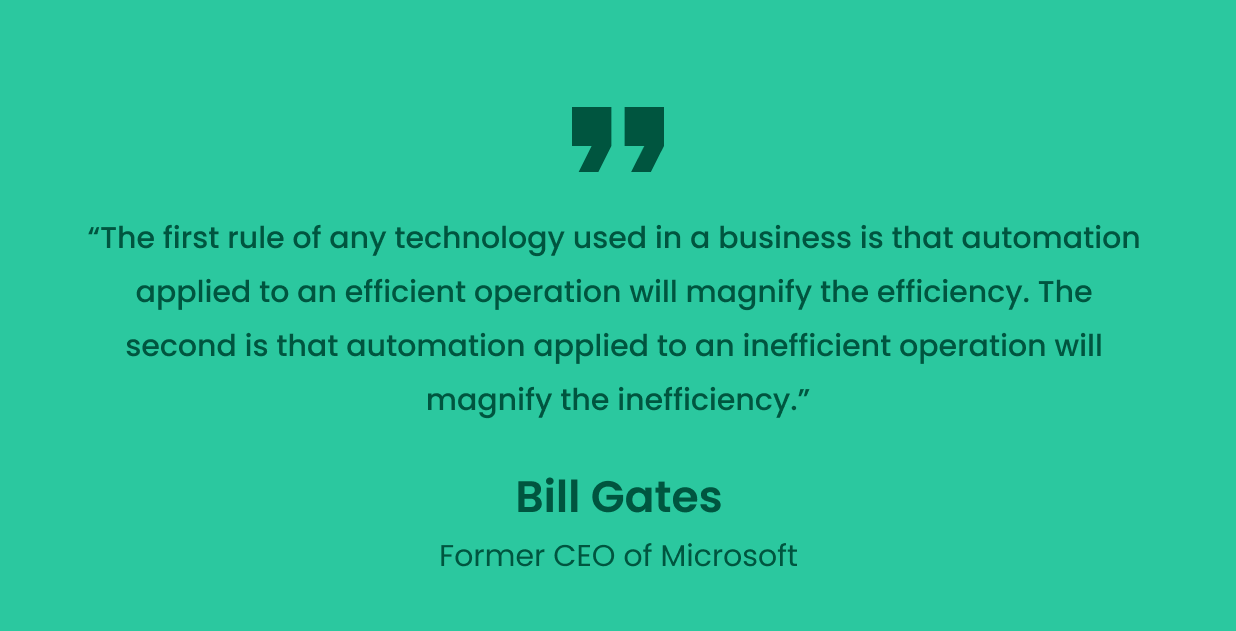
Bill Gates’s statement proves that automation has a direct connection with business efficiency.
In B2B, automation drives operational efficiency by ensuring accuracy, improving processes, and eliminating redundancies. Embrace automation to streamline various complex operations like:
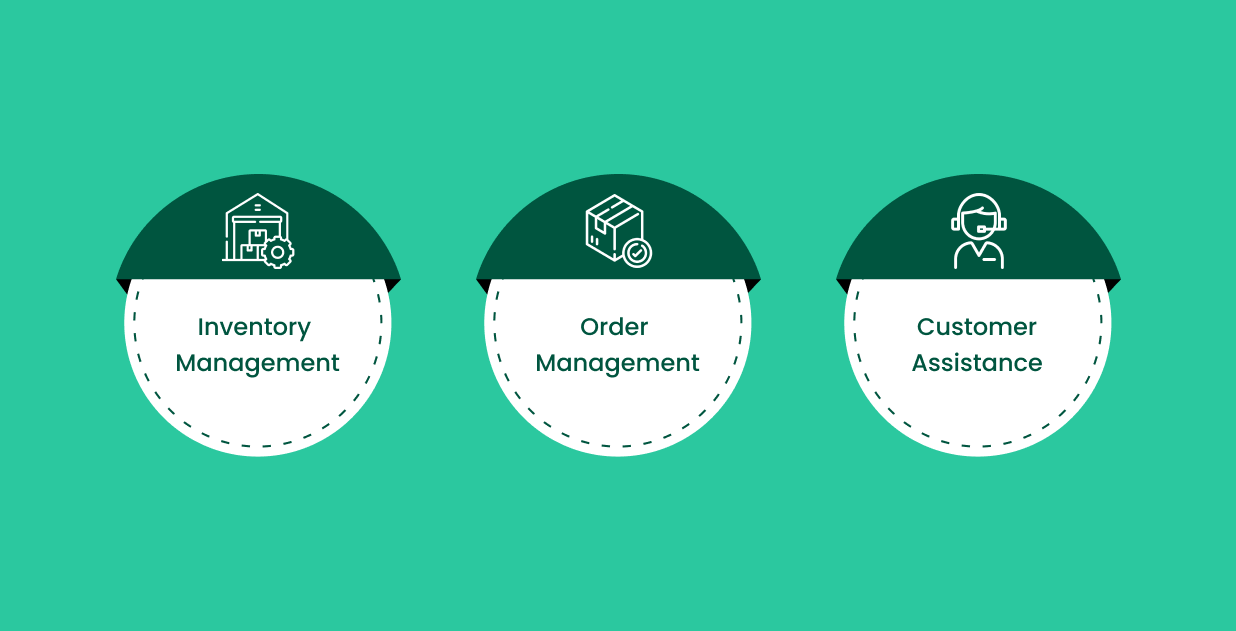
- Optimize your inventory management using predictive analytics. Leverage an accurate forecast of product demand. Automation helps you avoid product overstocking and understocking situations.
- Advanced B2B solutions provide corporate customers with automated order tracking from order placement to delivery. Automated order management process minimizes human errors significantly.
- AI-driven chatbots provide real-time assistance to customers by addressing their queries and concerns. It addresses complex issues faster than human executives by providing an accurate solution to a specific problem.
Apart from AI, Robotic Process Automation (RPA) technology is also used for automation. It helps speed up procedures for document verification and compliance audits that ensure quick and accurate decision-making.
Automation frees up valuable time for your team and helps them focus on attaining the strategic goals to drive operational excellence.
8. Self-Service Portals for B2B
Today’s B2B buyers are tech-savvy. They are interested in accomplishing the buying process by themselves without the help of a salesperson. 83% of B2B buyers prefer to place orders or pay online through digital commerce, which will increase considerably as time goes on.
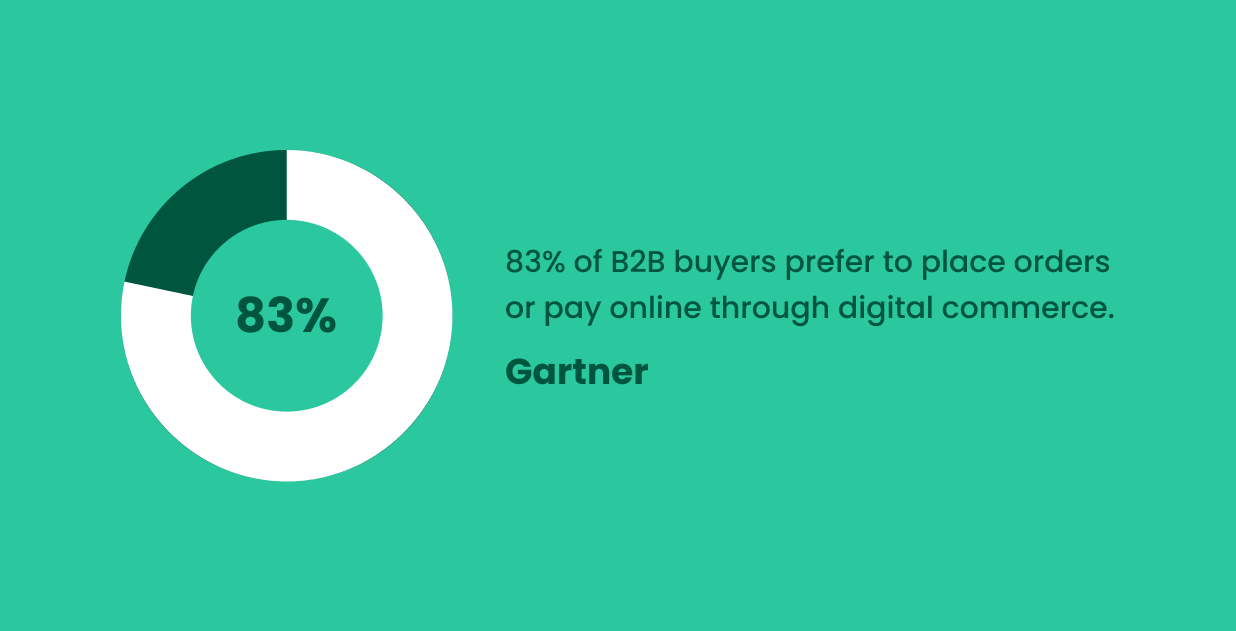
To empower corporate clients with independence, you can build a self-service portal that facilitates them with:
- A custom dashboard that manages their accounts, tracks order status, allows for quick re-ordering, and more.
- Create and share the tailored product catalog and pricing with the business buyers to increase engagement.
- Let your B2B customers place orders from your service portal.
- Provide automated customer support by harnessing the capabilities of AI-powered chatbots and automated ticketing systems.
9. Advanced Payment Solutions
In any eCommerce business, secured financial transactions are crucial. With the help of advanced payment solutions, you can provide safe and quick transactions to your corporate buyers. Companies prefer to use varied payment methods such as:
- Payment Gateway Integration
- Online Invoicing
- Recurring Billing
Offering multi-currency support, flexible payment terms, and real-time transaction tracking, you can meet the varied needs of the clientele. By providing secure payment solutions, you can win over customer trust, gain a competitive edge, and improve the cash flow.
10. Digital-First Customer Experiences
Unlike B2C shoppers, B2B buyers also expect personalized experiences.
A recent report by Adobe and Forrester revealed that 72% of B2B buyers expect personalization when using the product or software, 57% when discovering products, and 66% when buying products.
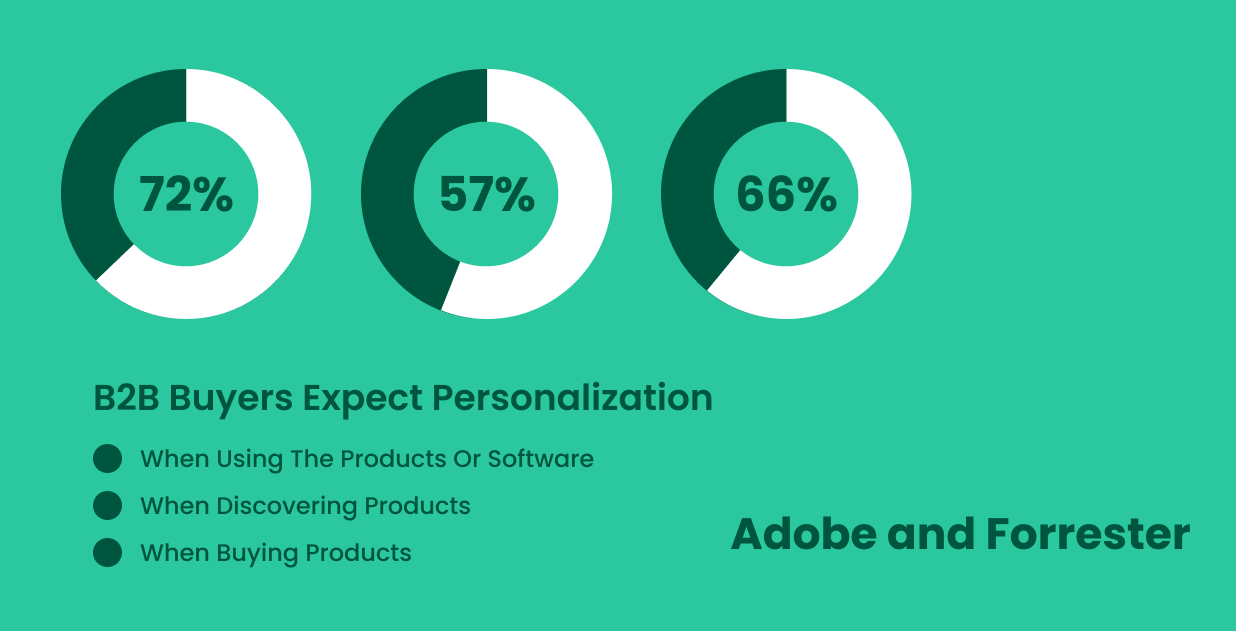
Thus, more and more B2B companies have started delivering a digital-first customer experience. They started creating personalized content, engaging UI, and self-service portals that empower the target audience.
To simplify the customers’ buying journey, you can leverage advanced technologies such as:
- Responsive Design
- AI-Powered Product Recommendations
- Real-Time Customer Support Using the Chatbot
With the help of advanced analytics and automation, you can predict customers’ changing buying behavior. The insights lead to repeat sales and improve client loyalty. Drive digital transformation for your B2B eCommerce brand by embracing digital-first strategies.
Ready to Embrace Digital Transformation in Your B2B Business?
In today’s competitive digital space, it will be difficult to attain growth. To pave the path to success, consider the latest tools and technologies that help you understand your customers and streamline your eCommerce processes. It contributes to increasing conversion and reducing operational costs.
Since 2004, ioVista has helped B2B brands optimize their business processes by delivering the best-in-class eCommerce solutions. Being a renowned B2B digital transformation agency, we have proven expertise in developing and implementing B2B solutions that simplify the buying journey for your corporate customers.
By integrating the latest technologies, such as AI, ML, Cloud, analytics, etc., into eCommerce solutions, we deliver hassle-free digital transformation to our clients.
Are you struggling to decide which drivers can empower your B2B ecosystem? Connect with our experts to select the right ones that add value to your business.
Frequently Asked Questions
What is the Future of B2B eCommerce?
B2B eCommerce will expand significantly in the coming years. Embracing advanced technologies, the domain is expected to grow drastically. Advanced analytics and automation transform the way the conventional B2B eCommerce industry works. Moreover, the latest technologies provide exclusive insights and help make accurate decisions.
Why is B2B the Future?
B2B businesses play a vital role in the world’s economy. It has been transforming the experiences for business customers. With the emergence of cutting-edge technologies, the B2B domain will reach a new height. Furthermore, B2B companies will experience exponential business growth.
Is B2B eCommerce Profitable?
From automated customer services to cost reduction, B2B eCommerce businesses gain many advantages using tech innovations. Considering eCommerce, B2B manufacturers and distributors can boost productivity, efficiency, and profitability.
Mike Patel

Mike Patel is the Founder and CEO of ioVista, a leading digital commerce agency specializing in eCommerce solutions. With a strong background in business and technology, Mike Patel has been at the forefront of driving digital transformations for businesses. He has successfully navigated the ever-changing landscape of eCommerce, helping companies leverage the power of online platforms to grow their brand, increase revenues, and optimize their digital presence. Under his leadership, ioVista has become a trusted partner with major technology companies: Adobe/Magento, Google, BigCommerce, Shopify, and Yahoo. He is dedicated to staying ahead of industry trends, adopting cutting-edge technologies, and continuously improving strategies to provide clients with a competitive edge. Mike’s commitment to excellence and client satisfaction is evident in every project ioVista undertakes.
Popular Posts
-
 AI and ML, B2B, Digital Marketing, E-Commerce, Web Development
Adobe Commerce Security Update APSB25-50: Key Highlights
Mike Patel
11 Jun 2025 -
 AI and ML, B2B, Digital Marketing, E-Commerce, Web Development
B2B Excellence Starts with Adobe Commerce (Magento) - Not WooCommerce
Mike Patel
03 Jun 2025 -
 AI and ML, B2B, Digital Marketing, E-Commerce, Web Development
AI and ML in B2B: A Vision for the Future of Commerce by 2025
Mike Patel
27 May 2025 -
 AI and ML, B2B, Digital Marketing, E-Commerce, Web Development
20 Next-Gen B2B eCommerce Features that will Dominate in 2025
Mike Patel
20 May 2025 -
 AI and ML, B2B, Digital Marketing, E-Commerce, Web Development
WooCommerce to BigCommerce Migration Fuels Your B2B eCommerce Growth
Mike Patel
06 May 2025 -
 AI and ML, B2B, Digital Marketing, E-Commerce, Web Development
Adobe Commerce SaaS: How Will It Empower Your eCommerce Business?
Mike Patel
22 Apr 2025 -
 AI and ML, B2B, Digital Marketing, E-Commerce, Web Development
Leverage ERP Integration to Scale Your B2B eCommerce Business in 2025
Mike Patel
15 Apr 2025 -
 AI and ML, B2B, Digital Marketing, E-Commerce, Web Development
Adobe Commerce Security Update APSB25-26: All You Need to Know
Mike Patel
10 Apr 2025 -
 AI and ML, B2B, Digital Marketing, E-Commerce, Web Development
Adobe Commerce 2.4.8 Release: Key Highlights
Mike Patel
10 Apr 2025 -
 AI and ML, B2B, Digital Marketing, E-Commerce, Web Development
Why Scaling Business Should Migrate WooCommerce Stores to Shopify
Mike Patel
08 Apr 2025 -
 AI and ML, B2B, Digital Marketing, E-Commerce, Web Development
Why Does Adobe Commerce (Magento) Lead the Way of B2B eCommerce
Mike Patel
18 Mar 2025 -
 AI and ML, B2B, Digital Marketing, E-Commerce, Web Development
10 Key Drivers of Digital Transformation in B2B eCommerce for 2025
Mike Patel
04 Mar 2025 -
 AI and ML, B2B, Digital Marketing, E-Commerce, Web Development
5 Leading eCommerce Platforms to Build Scalable B2B Customer Portals
Mike Patel
25 Feb 2025 -
 AI and ML, B2B, Digital Marketing, E-Commerce, Web Development
Google Search Ranking Volatility: All You Need to Know
Mike Patel
18 Feb 2025 -
 AI and ML, B2B, Digital Marketing, E-Commerce, Web Development
Adobe Commerce Security Update APSB25-08: All You Need to Know
Mike Patel
13 Feb 2025 -
 AI and ML, B2B, Digital Marketing, E-Commerce, Web Development
7 Strategic Benefits of an Online B2B Customer Portal
Mike Patel
11 Feb 2025 -
 AI and ML, B2B, Digital Marketing, E-Commerce, Web Development
What Makes a Great Online B2B Customer Portal? Top 10 Features to Know
Mike Patel
04 Feb 2025 -
 AI and ML, B2B, Digital Marketing, E-Commerce, Web Development
Legacy B2B eCommerce Systems Slowing You Down? It's Time for Modernization
Mike Patel
28 Jan 2025 -
 AI and ML, B2B, Digital Marketing, E-Commerce, Web Development
Essential B2B Commerce Features for 2024
Mike Patel
20 Nov 2024 -
 AI and ML, B2B, Digital Marketing, E-Commerce, Web Development
Security Update Available for Adobe Commerce | APSB24-90
Mike Patel
20 Nov 2024 -
 AI and ML, B2B, Digital Marketing, E-Commerce, Web Development
Why Choose Hyvä Enterprise for Your Adobe Commerce Store?
Mike Patel
19 Nov 2024 -
 AI and ML, B2B, Digital Marketing, E-Commerce, Web Development
Security Update APSB24-73 for Adobe Commerce: Everything You Need to Know
Mike Patel
14 Oct 2024 -
 AI and ML, B2B, Digital Marketing, E-Commerce, Web Development
CosmicSting Exploit Still Poses a Threat
Mike Patel
25 Jul 2024 -
 AI and ML, B2B, Digital Marketing, E-Commerce, Web Development
CosmicSting: Unauthorized XXE Vulnerability
Mike Patel
17 Jul 2024 -
 AI and ML, B2B, Digital Marketing, E-Commerce, Web Development
Magento 2.4.7: Explore the Newest Enhancements and Features
Mike Patel
30 Apr 2024 -
 AI and ML, B2B, Digital Marketing, E-Commerce, Web Development
Magento 2.4.6-p5: Enhancing Stability and Security
Mike Patel
22 Apr 2024 -
 AI and ML, B2B, Digital Marketing, E-Commerce, Web Development
Everything You Need To Know About eCommerce SEO in 2024
Mike Patel
16 Apr 2024 -
 AI and ML, B2B, Digital Marketing, E-Commerce, Web Development
The Impact of Site Speed on eCommerce SEO Performance
Mike Patel
14 Feb 2024 -
 AI and ML, B2B, Digital Marketing, E-Commerce, Web Development
ioVista Attains B2B Specialization on BigCommerce
Mike Patel
30 Oct 2023 -
 AI and ML, B2B, Digital Marketing, E-Commerce, Web Development
5 Ways to Boost eCommerce Sales in 2024
Mike Patel
21 Sep 2023 -
 AI and ML, B2B, Digital Marketing, E-Commerce, Web Development
It’s Official: ioVista Has Become a Recognized Adobe Specialized Partner
Mike Patel
05 Sep 2023 -
 AI and ML, B2B, Digital Marketing, E-Commerce, Web Development
Magento 2.4.7-beta1 Release
Mike Patel
15 Aug 2023 -
 AI and ML, B2B, Digital Marketing, E-Commerce, Web Development
Why Are You Still Using Yahoo Stores in 2023?
Mike Patel
05 Jul 2023 -
 AI and ML, B2B, Digital Marketing, E-Commerce, Web Development
ioVista Announced as a 2023 Local Excellence Award Winner by UpCity
Mike Patel
09 May 2023 -
 AI and ML, B2B, Digital Marketing, E-Commerce, Web Development
Google Analytics 4: What You Need To Know
Mike Patel
29 Mar 2023 -
 AI and ML, B2B, Digital Marketing, E-Commerce, Web Development
Adobe Commerce 2.4.6 Release
Mike Patel
13 Mar 2023 -
 AI and ML, B2B, Digital Marketing, E-Commerce, Web Development
Questions You Should Ask Your Magento Agency
Mike Patel
17 Feb 2023 -
 AI and ML, B2B, Digital Marketing, E-Commerce, Web Development
7 Proven Strategies to Increase B2B/Wholesale eCommerce Revenue
Mike Patel
01 Feb 2023 -
 AI and ML, B2B, Digital Marketing, E-Commerce, Web Development
10 eCommerce Trends to Increase your Sales in 2023
Mike Patel
12 Jan 2023 -
 AI and ML, B2B, Digital Marketing, E-Commerce, Web Development
B2B eCommerce Features Your Store Need in 2023
Mike Patel
05 Jan 2023 -
 AI and ML, B2B, Digital Marketing, E-Commerce, Web Development
Adobe/Magento Highlights 2022 - Is your store Up-to-Date
Mike Patel
20 Dec 2022 -
 AI and ML, B2B, Digital Marketing, E-Commerce, Web Development
Adobe discontinues Support for the 2.4.0-2.4.3 Release Line
Mike Patel
09 Dec 2022 -
 AI and ML, B2B, Digital Marketing, E-Commerce, Web Development
BFCM Round-Up – Get Your Store Ready for Christmas 2022!
Mike Patel
07 Dec 2022 -
 AI and ML, B2B, Digital Marketing, E-Commerce, Web Development
Universal Analytics Going Away: What Does it Mean, What you need to Do?
Mike Patel
24 Nov 2022 -
 AI and ML, B2B, Digital Marketing, E-Commerce, Web Development
40% of Magento and Adobe Commerce Websites at Risk in November 2022
Mike Patel
17 Nov 2022 -
 AI and ML, B2B, Digital Marketing, E-Commerce, Web Development
ioVista Awarded the Best B2B Company 2022
Mike Patel
04 Nov 2022 -
 AI and ML, B2B, Digital Marketing, E-Commerce, Web Development
Adobe Releases Critical Security Patches for Magento 2.4.5 and 2.4.4
Mike Patel
27 Oct 2022 -
 AI and ML, B2B, Digital Marketing, E-Commerce, Web Development
Holiday Season Best Practices for eCommerce
Mike Patel
20 Oct 2022 -
 AI and ML, B2B, Digital Marketing, E-Commerce, Web Development
ioVista is Sponsoring the Largest eCommerce Event in Dallas
Mike Patel
07 Oct 2022 -
 AI and ML, B2B, Digital Marketing, E-Commerce, Web Development
Magento 2 Vulnerability: Surge in Hacking on Unpatched Stores
Mike Patel
27 Sep 2022 -
 AI and ML, B2B, Digital Marketing, E-Commerce, Web Development
Get your Holiday eCommerce Marketing Started with These 5 Tips
Mike Patel
15 Sep 2022 -
 AI and ML, B2B, Digital Marketing, E-Commerce, Web Development
Why a Magento Code Audit is Essential for your eCommerce Store
Mike Patel
10 Sep 2022 -
 AI and ML, B2B, Digital Marketing, E-Commerce, Web Development
Launching a Successful eCommerce Store
Mike Patel
30 Aug 2022 -
 AI and ML, B2B, Digital Marketing, E-Commerce, Web Development
Choosing the Right eCommerce Platform for B2B
Mike Patel
25 Aug 2022 -
 AI and ML, B2B, Digital Marketing, E-Commerce, Web Development
The Challenges of eCommerce in Manufacturing and how to Overcome them
Mike Patel
17 Aug 2022 -
 AI and ML, B2B, Digital Marketing, E-Commerce, Web Development
Adobe Releases Magento Open Source and Adobe Commerce 2.4.5
Mike Patel
10 Aug 2022 -
 AI and ML, B2B, Digital Marketing, E-Commerce, Web Development
How Manufacturers can Switch to eCommerce
Mike Patel
02 Aug 2022 -
 AI and ML, B2B, Digital Marketing, E-Commerce, Web Development
Benefits of eCommerce for Manufacturing
Mike Patel
25 Jul 2022 -
 AI and ML, B2B, Digital Marketing, E-Commerce, Web Development
Magento 2.3.x End-of-Life in September 2022
Mike Patel
19 Jul 2022 -
 AI and ML, B2B, Digital Marketing, E-Commerce, Web Development
The Growth of eCommerce and its impact on the Manufacturing Industry
Mike Patel
01 Jul 2022 -
 AI and ML, B2B, Digital Marketing, E-Commerce, Web Development
The Future of Manufacturing Business is Digital
Mike Patel
24 Jun 2022 -
 AI and ML, B2B, Digital Marketing, E-Commerce, Web Development
Magento Open Source Vs Commerce Vs Cloud: How to Pick your Edition
Mike Patel
14 Jun 2022 -
 AI and ML, B2B, Digital Marketing, E-Commerce, Web Development
Is your Store Optimized? How do you Measure eCommerce Conversion Rates?
Mike Patel
11 May 2022 -
 AI and ML, B2B, Digital Marketing, E-Commerce, Web Development
ioVista Recognized for B2B Services: Excellence Award Winner 2022
Mike Patel
03 May 2022 -
 AI and ML, B2B, Digital Marketing, E-Commerce, Web Development
How to Optimize Your eCommerce Store for Conversions
Mike Patel
29 Apr 2022 -
 AI and ML, B2B, Digital Marketing, E-Commerce, Web Development
Future Proof your Digital Commerce with Headless Commerce
Mike Patel
21 Apr 2022 -
 AI and ML, B2B, Digital Marketing, E-Commerce, Web Development
Adobe Commerce 2.4.4 Release: Faster, Better, More Scalable
Mike Patel
13 Apr 2022 -
 AI and ML, B2B, Digital Marketing, E-Commerce, Web Development
Is Your Business Ready for Digital Transformation? The Key Steps!
Mike Patel
01 Mar 2022 -
 AI and ML, B2B, Digital Marketing, E-Commerce, Web Development
CVE-2022-24086 What is it?
Mike Patel
16 Feb 2022 -
 AI and ML, B2B, Digital Marketing, E-Commerce, Web Development
February 2022, over 500 Legacy Magento 1 Websites Hacked!
Mike Patel
15 Feb 2022 -
 AI and ML, B2B, Digital Marketing, E-Commerce, Web Development
Adobe released a new End of Support Date for Magento 2.3.x
Mike Patel
04 Feb 2022 -
 AI and ML, B2B, Digital Marketing, E-Commerce, Web Development
The How & Why: Successful Data-Driven Marketing for eCommerce Stores
Mike Patel
13 Jan 2022 -
 AI and ML, B2B, Digital Marketing, E-Commerce, Web Development
How to Find Right Audience for your Online Business
Mike Patel
10 Jan 2022 -
 AI and ML, B2B, Digital Marketing, E-Commerce, Web Development
5 Key Reasons to Enable Social Commerce Channels for your Store
Mike Patel
17 Dec 2021 -
 AI and ML, B2B, Digital Marketing, E-Commerce, Web Development
ioVista is honored to be one of the Top 1000 Companies 2021
Mike Patel
13 Dec 2021 -
 AI and ML, B2B, Digital Marketing, E-Commerce, Web Development
Are Your FB, Instagram, Pinterest Accounts Geared for Social Shopping?
Mike Patel
30 Nov 2021 -
 AI and ML, B2B, Digital Marketing, E-Commerce, Web Development
Five BFCM Strategies Merchants Love To Implement For Holidays
Mike Patel
26 Oct 2021 -
 AI and ML, B2B, Digital Marketing, E-Commerce, Web Development
How to Meet Holiday Shoppers’ Needs With an Omnichannel Approach
Mike Patel
20 Oct 2021 -
 AI and ML, B2B, Digital Marketing, E-Commerce, Web Development
Support for Magento Commerce 2.3 and Magento Open Source 2.3 Ends
Mike Patel
05 Oct 2021 -
 AI and ML, B2B, Digital Marketing, E-Commerce, Web Development
Why your Business Needs Marketing Automation this Holiday Season
Mike Patel
30 Sep 2021 -
 AI and ML, B2B, Digital Marketing, E-Commerce, Web Development
How Augmented Reality can Deliver more Engaging Shopping Experiences
Mike Patel
21 Sep 2021 -
 AI and ML, B2B, Digital Marketing, E-Commerce, Web Development
These 5 Local Business Marketing Strategies Will Transform Your Business
Mike Patel
17 Sep 2021 -
 AI and ML, B2B, Digital Marketing, E-Commerce, Web Development
How eCommerce can be the Game Changer for Warehouses
Mike Patel
08 Sep 2021 -
 AI and ML, B2B, Digital Marketing, E-Commerce, Web Development
Magento 2.4.3 has arrived! Everything you Need to Know
Mike Patel
11 Aug 2021 -
 AI and ML, B2B, Digital Marketing, E-Commerce, Web Development
ioVista named 2021 Top B2B Company in Dallas and Texas
Mike Patel
05 Aug 2021 -
 AI and ML, B2B, Digital Marketing, E-Commerce, Web Development
Why Every Business Should Be on eCommerce
Mike Patel
29 Jul 2021








Let’s work together to create outstanding digital experiences.
With 20+ years of industry experience, ioVista understands your eCommerce needs and delivers best-in-class solutions that help you gain a competitive edge.
or Call us at: +1 214-699-4391

TOP
Get in Touch